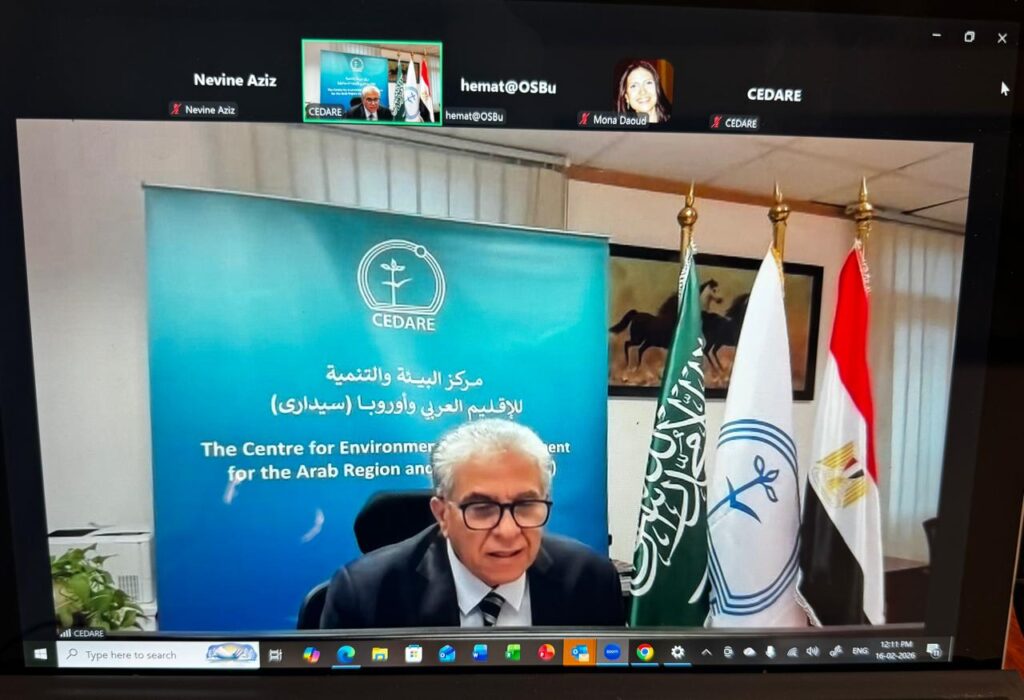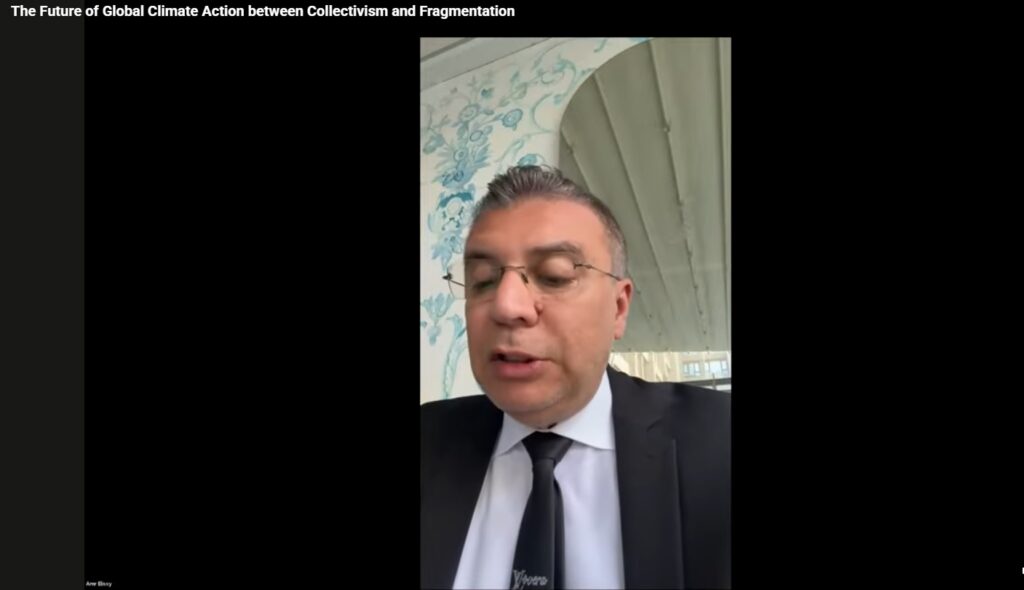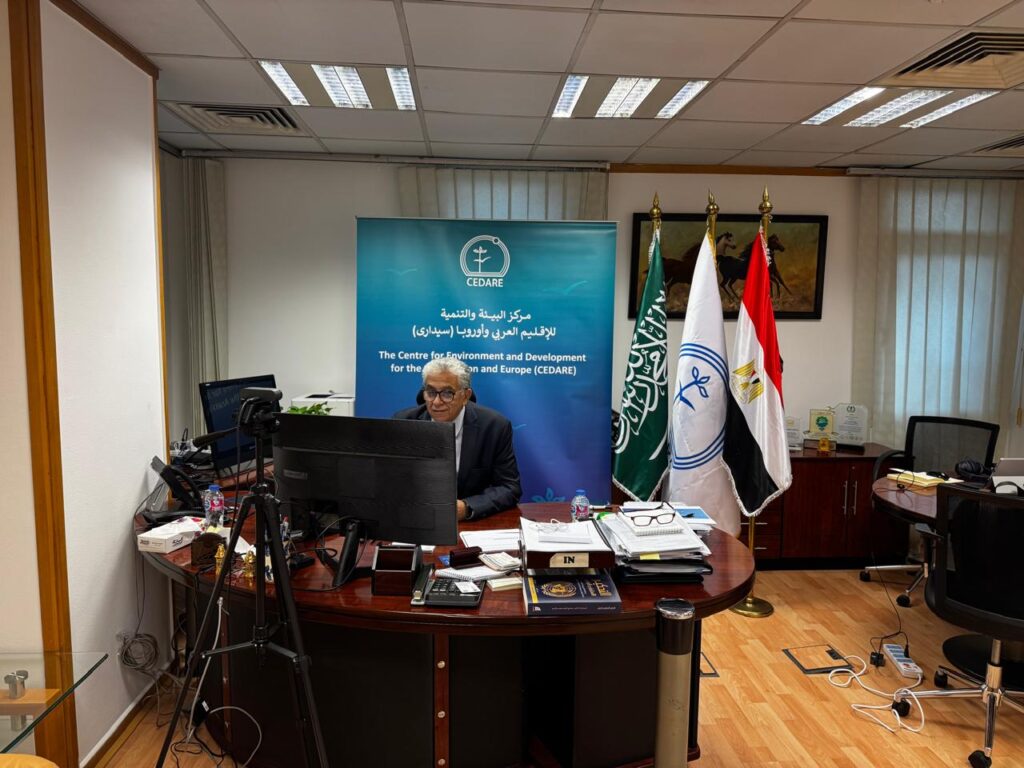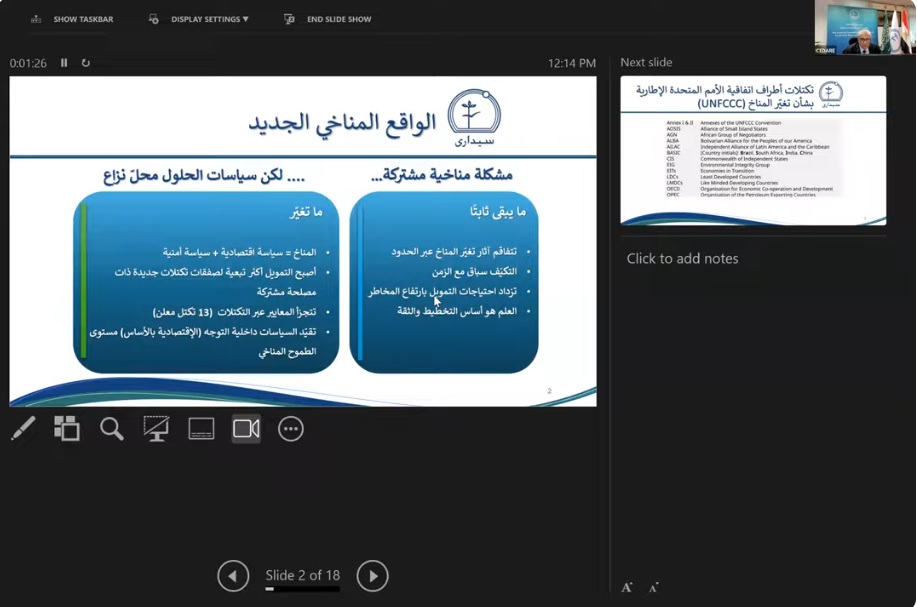
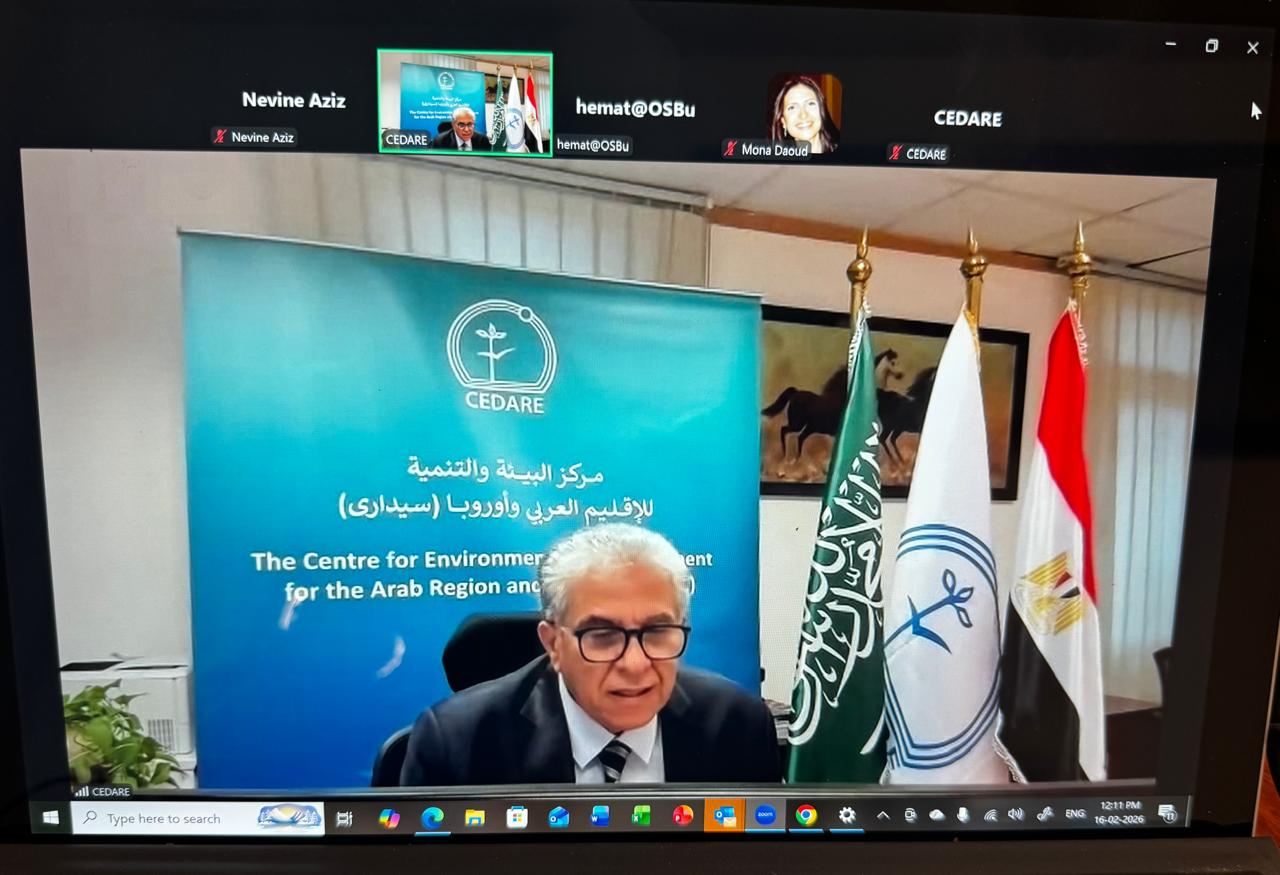
Within the framework of institutional cooperation between the Environment and Development Centre for the Arab Region and Europe (CEDARE) and the Organization of Islamic Cooperation Broadcasting Union (OICBU), Prof. Dr. Khaled Fahmy—Executive Director of CEDARE and former Minister of Environment—presented an analytical perspective on the future of the global climate action framework in the post-COP30 era.
Against a backdrop of a rapidly evolving global climate reality shaped by geopolitical and economic transformations, the presentation examined ongoing shifts within the UNFCCC climate regime and the emergence of a “two-speed climate system,” in which mitigation efforts are advancing faster than adaptation, loss, and damage—heightening global vulnerability.
The presentation also outlined three potential pathways for the future configuration of the global climate system, highlighting the acceleration of sectoral alliances, the growing role of multilateral development banks, and the strengthening of regional carbon markets.
Dr. Fahmy emphasized that the Arab region stands at a particularly sensitive intersection of climate vulnerability, hydrocarbon dependence, and energy geopolitics—requiring priority action through:
 A regional adaptation compact
Bankable pathways supported by blended finance
Enhanced credibility and integrity of carbon markets
Strengthened climate science services and regional risk analysis
Key Message:
Global climate action is increasingly unfolding along parallel tracks of cooperation and fragmentation. Success will depend on building flexible, interest-based coalitions capable of delivering tangible results today—while keeping the door open for renewed global convergence in the future.
For more information about the webinar, please visit: