Waste2Fashion: Developing a pilot circular system for post-consumer textile waste in the Mediterranean
Current Project: 2025-2028
Waste2Fashion aims to minimize the negative environmental impact of post-consumer textile waste and maximizing the socio-economic opportunities presented by the growing sustainable fashion sector.
Description of the Project
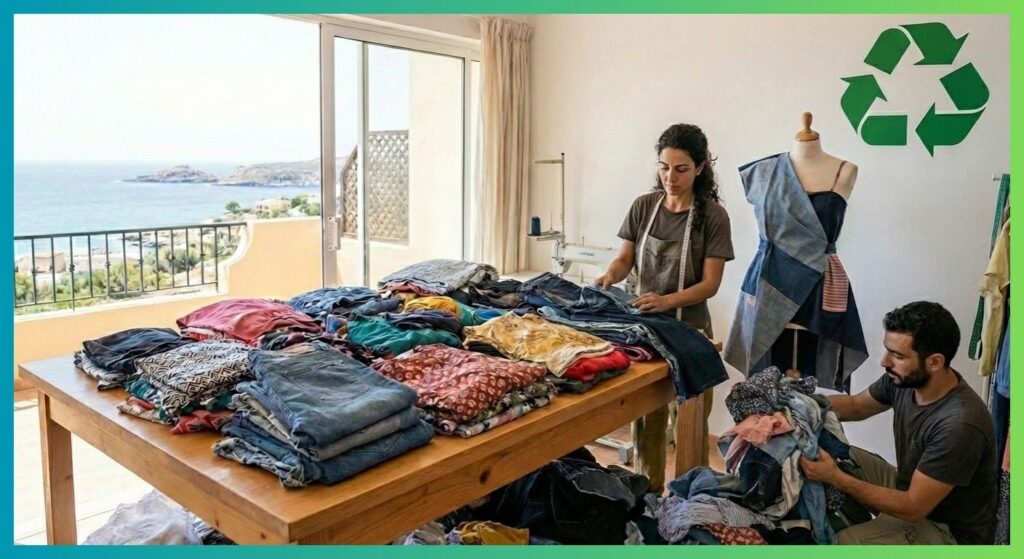
The fashion industry now places an unprecedented burden on the environment, with annual clothing sales exceeding 100 billion items worldwide and output having surged to twice its former level over the past ten years. As a result, discarded textiles have emerged as one of the most rapidly expanding waste streams globally. Despite this, circular practices remain extremely limited, as under 1% of used textiles are reintegrated into new fashion products, while the overwhelming majority are either burned or disposed of in landfills. This challenge is evident in the 5 involved territories (Egypt, Italy, Lebanon, Spain, and Tunisia), where systems for large-scale textile reuse and recycling are still insufficient to counteract the environmental consequences of the prevailing linear fashion model. Waste2Fashion is a regional project addressing the growing challenge of textile waste by promoting circular economy solutions in the fashion sector in five mediterranean countries: Egypt, Italy, Lebanon, Spain, and Tunisia. Its main objective is to reduce textile waste and environmental impacts by establishing sustainable systems for textile waste collection, sorting, and pre-recycling.
The project combines practical pilots with capacity building and innovation support. It develops local textile waste value chains, trains designers and start-ups in eco-design, and supports circular business models through acceleration activities.
Key expected achievements include operational pilot systems, a new generation of circular fashion practitioners, and viable business models for long-term textile waste valorisation.
Through engagement with policymakers and key stakeholders, Waste2Fashion also supports policy uptake and integration of circular textiles into waste and industry frameworks.
CEDARE's Role
CEDARE plays a central role in Waste2Fashion, with major contributions in Work Package 5 on capitalisation, exploitation & policy uptake, and supportive actions under WP4 capacity-building activities.
CEDARE translates project results into practical guidelines and policy recommendations for post-consumer textile waste management, integrating environmental, economic, and social considerations.
Through targeted dissemination, policy dialogue, and engagement with public authorities and sector stakeholders, CEDARE ensures that project results are scalable, transferable, and able to inform national and regional policies beyond the project’s lifetime.
Interreg NEXT MED
Funded through the Interreg NEXT MED Programme, Waste2fashion contributes to a broader mission of fostering smart, equitable, and green growth across the Mediterranean. The programme is dedicated to building resilient, long-term partnerships and promoting integrated governance. To achieve this, NEXT MED finances collaborative projects that address widespread regional issues.
These efforts span a diverse range of sectors, including technological innovation, small business support, resource management, climate resilience, circular economy transitions, and improvements in education and public health.
Consortium
Waste2Fashion consortium brings together seven partners across five countries:
MedWaves, the UNEP/MAP Regional Activity Centre for SCP (hosted by the Waste Agency of Catalonia) - Spain (Lead Partner)
The Centre for Environment and Development for the Arab Region and Europe (CEDARE) – Egypt
The Egyptian Clothing Bank (Egypt)
Next Technology Tecnotessile (Italy)
Fondazione Museo del Tessuto (Italy)
La Fédération Tunisienne du Textile et de l‘Habillement (FTTH) – Tunisia