
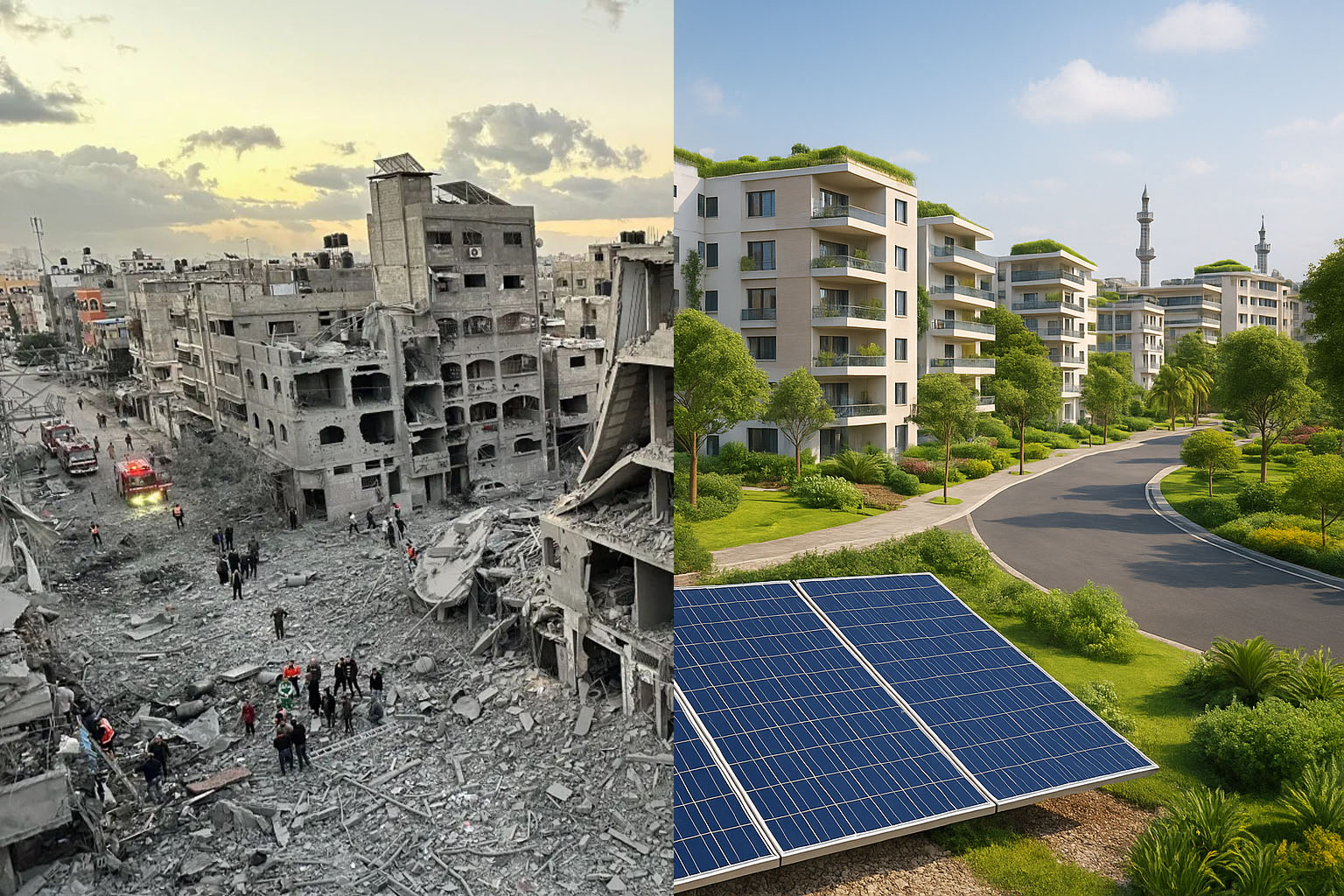
Introduction: Charting a Course from Crisis to Resilience
This strategic framework synthesizes the findings of the United Nations Environment Programme’s (UNEP) Second Assessment to propose a cohesive, sequenced strategy for the environmental recovery of the Gaza Strip. The scale of environmental degradation resulting from the conflict is unprecedented, impacting every aspect of life and creating complex, interlinked challenges that threaten the health and well-being of the population for generations to come.
This framework asserts a fundamental principle: environmental restoration is not a separate or delayed priority to be addressed after humanitarian needs are met; it is an indispensable foundation for public health, food security, economic revitalisation, and the long-term resilience of the people of Gaza. Restoring access to clean water, managing the monumental task of debris clearance, decontaminating agricultural land, and rebuilding essential services on a sustainable basis are prerequisites for any meaningful and lasting recovery.
This report is intended to guide coordinated planning and investment among international partners, humanitarian agencies, and the relevant Palestinian authorities while also highlighting areas for collaboration with neighbouring countries, making use of existing regional collaboration frameworks and mechanisms. Its purpose is to ensure that the immense task of reconstruction is approached as an opportunity to build back better founding the future of Gaza not on the unsustainable practices of the past, but on the principles of environmental sustainability, climate resilience, and long-term human well-being.
The Foundational Challenge: Scale of Environmental Degradation
Comprehending the unprecedented scale and multi-faceted nature of the environmental damage is of paramount strategic importance. This understanding must inform the scope, sequencing, and resourcing of all recovery and reconstruction efforts. The conflict has caused a catastrophic collapse of the natural and built systems upon which the population of Gaza depends, creating a crisis of staggering proportions.
The following key indicators, drawn from the UNEP Second Assessment which projects damage up to mid-2025, illustrate the magnitude of this cross-domain environmental devastation:
- Massive Debris Generation: Over 61 million tons of debris have been generated. This quantity is twenty times greater than the combined total of all debris from previous conflicts in Gaza since 2008, presenting an unparalleled management and logistical challenge.
- Catastrophic Infrastructure Collapse: Essential systems have failed almost completely. There has been an 84% reduction in water reservoir and pumping capacity, and critically, none of Gaza’s wastewater treatment facilities are operational, leading to the uncontrolled release of sewage.
- Destruction of Agricultural Land: Remote sensing assessments from May 2025 reveal that 97.1% of tree crops and 82.4% of annual crops have been damaged. This has crippled Gaza’s food production capacity and erased a vital part of its economy.
- Widespread Structural Destruction: An estimated 78% of all structures in the Gaza Strip are destroyed or damaged, displacing the population and creating the vast quantities of debris that now cover the landscape.
- Severe Public Health Crisis: The environmental collapse has directly fuelled a public health emergency. Cases of acute watery diarrhoea have seen a 36-fold increase, and the breakdown of sanitation systems has led to the re-emergence of poliovirus detected in environmental samples.
This catastrophic damage is not an insurmountable obstacle, but rather the starting point from which a systematic, science-based, and inclusive recovery process must be launched.
Strategic Imperatives Across Key Environmental Domains
To effectively implement the phased framework, a deeper analysis of the core strategies for each critical environmental sector is required. This section provides a detailed examination of the interconnected challenges in water, debris management, and land use, linking specific actions and policy recommendations back to the overarching goal of a sustainable reconstruction.
· Water and Sanitation: Restoring the Lifeline of Public Health
The collapse of Gaza’s water and sanitation infrastructure is a primary driver of the ongoing public health crisis. The recovery effort must address the dual needs of restoring immediate supply to halt the spread of disease while simultaneously planning for a water-secure and sustainable future. This requires a strategic shift away from the unsustainable practices that characterized the pre-conflict era.
Core strategic recommendations include:
- Urgent System Rehabilitation: The immediate priority must be to rebuild water supply and wastewater treatment capacity to prevent further outbreaks of communicable diseases. The near-total failure of these systems creates conditions ripe for epidemics, and lessons from post-crisis cholera outbreaks, such as in Haiti, underscore the urgency of restoring basic services.
- Sustainable Aquifer Management: The reconstruction process presents a critical opportunity to shift away from the historic over-abstraction of the coastal aquifer. The UNEP-derived 2030 water scenario provides a clear model: meeting a total demand of 274.4 MCM/year while capping groundwater abstraction at a sustainable 50 MCM/year. This necessitates a strategic investment to generate over 130 MCM/year from desalination and 74 MCM/year from recycled wastewater.
- Wastewater as a Resource: The reconstruction of wastewater treatment facilities should be framed as a strategic investment in food security. By designing systems that treat wastewater to a high standard, it can be safely reused in agriculture, as outlined in the Palestinian Water Authority’s National Reuse Strategy. This approach simultaneously protects the environment from pollution and provides a climate-resilient water source for local food production, reducing dependency on the rainfall-dependent aquifer and enhancing long-term food sovereignty.
- Gender-Responsive Design: The design and placement of all new Water, Sanitation, and Hygiene (WASH) facilities must ensure the safety, privacy, and dignity of women and girls. As recommended by UN Women, this includes adequate lighting, locks, and accessibility, which are crucial for enabling greater participation in education and the workplace.
· Debris and Urban Environment: Paving the Way for a Resilient Future
The management of over 61 million tons of debris is the foundational prerequisite for all other humanitarian, recovery, and reconstruction activities. To address this foundational challenge, a multi-agency Gaza Debris Management Working Group has been established. Its ‘Debris Management Framework’ provides the essential, risk-managed approach for all subsequent operations, viewing debris not merely as waste but as a resource for rebuilding.
The imperative is recycling as a necessity. Given Gaza’s dense population and limited land, landfilling the estimated 727 hectares required for debris disposal is simply unviable. Furthermore, recycling 50% of the debris could yield an estimated 20% cost saving for the entire debris management operation. To put this in perspective, projections indicate that debris operations would cost approximately US 966 million if 50% of the debris is recycled, compared to US 1.2 billion if all debris were to be disposed of without recycling. The protocols of the Gaza Debris Management Working Group are designed to overcome the critical risks inherent in this process:
- Hazardous Material Management: Debris is contaminated with a range of hazardous materials requiring specialized handling. This includes asbestos from the older building stock in refugee camps, industrial chemicals from damaged facilities, and heavy metals from the thousands of destroyed solar power installations.
- Unexploded Ordnance Risk: A high concentration of unexploded ordnance is embedded within the debris, posing a lethal threat to clearance teams and the public. Safe removal and disposal by specialized teams is a critical first step to prevent further loss of life and future environmental contamination.
- Dignified Recovery of Remains: With an estimated 10,000 people believed to be buried under the rubble, debris clearance operations must be conducted with the utmost sensitivity and incorporate procedures for the dignified recovery, identification, and management of human remains.
Looking forward, urban reconstruction must be guided by principles of climate resilience and liveability. This includes adopting ‘Green Building’ approaches such as LEED, EDGE and BREEAM, to manage extreme heat, planning for accessible public transport systems that cater to all residents, including the large cohort of child amputees, and preserving public green spaces as vital resources for community health and well-being.
· Land, Soil, and Food Security: Reclaiming a Productive Landscape
Rehabilitating Gaza’s agricultural landscape is a non-negotiable prerequisite for averting long-term famine and rebuilding a key pillar of the economy. The recovery strategy must therefore aggressively pursue the twin challenges of decontaminating land from munitions and waste while urgently restarting food production to alleviate famine conditions.
A multi-pronged strategy for agricultural rehabilitation should include:
- Systematic Soil Assessment: An urgent, large-scale survey is needed to map the extent and type of contaminants in agricultural soils. This scientific assessment is critical for identifying areas where cultivation must be restricted until cleanup is complete, thereby protecting public health and preventing contaminants from entering the food chain.
- Protection of Viable Land: The small but significant areas of agricultural land that remain undamaged must be identified and protected in all future spatial plans. Preserving this land-use heterogeneity is essential for maintaining a base for agricultural recovery and ecological resilience. Crucially, this includes ensuring that temporary housing and relief infrastructure are sited with care to avoid degrading these remaining productive areas, as their preservation is essential for near-term food production.
- Prioritising Women in Agriculture: The destruction of land records disproportionately affects women. Recovery efforts must include targeted support for women-led producer groups and joint tenure support to ensure their full economic participation and empowerment in the revitalized agricultural sector.
- Wadi Gaza Restoration: The rehabilitation of Wadi Gaza must be a strategic priority. As a vital ecological corridor, its restoration is essential for protecting regional biodiversity, supporting migratory species, and providing a unique and irreplaceable natural resource for the people of Gaza.
Governance and Institutional Capacity: The Enablers of a Successful Recovery
Technical plans and financial investments, no matter how well-conceived, will ultimately fail without robust governance frameworks and strong institutional capacity to lead, coordinate, and monitor the recovery process. The success, legitimacy, and long-term sustainability of the reconstruction effort depend on empowering Palestinian leadership and leveraging local expertise.
The core governance recommendations to enable a successful environmental recovery are:
- Mandate an Early Risk Screening: In line with UNEP’s recommendation, an immediate ecological and environmental health risk screening exercise must be undertaken. This will allow for a systematic, evidence-based approach to identifying and prioritizing the most critical areas for assessment and management.
- Strengthen Palestinian Institutions: Targeted investment must be directed toward rebuilding the core planning, monitoring, and enforcement capacity of the Palestinian Environment Quality Authority and other relevant bodies. Strong national institutions are the bedrock of a self-sustaining and well-managed recovery.
- Leverage Local Expertise: The reconstruction must draw upon the deep knowledge and experience of Palestinian scientists, engineers, planners, and environmental specialists from universities, the private sector, and non-governmental organisations. Their involvement is crucial for developing context-appropriate and effective solutions.
- Ensure Inter-Sectoral Coordination: Strong coordination mechanisms must be established to ensure that environmental considerations are fully integrated into all sector-specific recovery plans, including housing, health, infrastructure, and the economy. An integrated approach is essential to avoid siloed planning and to maximize co-benefits.
These governance principles are key to translating this strategic framework from a vision on paper into tangible, lasting results on the ground.
A Lasting Impact: Transboundary Threats, Intergenerational Debt
The environmental degradation inflicted upon the Gaza Strip is expected to have profound, broad and persistent lasting effects, creating a toxic environmental legacy that will impact ecosystems, biodiversity, and environmental resilience for generations to come.
One of the most critical long-term consequences is the potential for irreversible contamination and degradation of the Coastal Aquifer, driven by over-abstraction, the seepage of raw sewage, and pollution from munitions and waste leachate, which will necessitate decades of recovery work to restore water quality and quantity. Similarly, widespread contamination of agricultural soil is expected, with pollutants, including heavy metals and chemicals from munitions, likely persisting in the environment, mirroring trends seen in other conflict zones where contamination lasted over a century. This soil damage, coupled with the loss of vegetation and compaction from military activity, could lead to a long-term loss of soil material that takes decades to recover, consequently hindering future agricultural production and perpetuating food insecurity.
Furthermore, the marine environment faces chronic pollution risks, with recovery of natural flora and fauna from ongoing sewage discharge demanding a 10–25-year cessation of pollution input, while the collapse of regional ecological sites, such as Wadi Gaza, carries broader regional consequences for biodiversity and environmental stability. Moreover, the sheer volume of conflict-generated debris—estimated at over 61 million tons—presents a decades-long logistical challenge, with debris disposal projected to take up to 15 years, and large-scale recycling efforts potentially lasting around 45 years, compounded by the many years required for the clearance of unexploded ordnance.
These significant consequences are also transboundary, necessitating structured and urgent collaboration between the Palestinian authorities and neighbouring countries, to mitigate regional risks and ensure sustainable recovery. Collaboration is crucial because the impacts, especially related to contamination, water systems, and ecosystems, transcend Gaza’s borders. Addressing these shared risks requires coordinated effort aligned with international obligations. Following are some of the mechanisms for regional collaboration on the environmental impact.
· Managing Transboundary Marine Pollution and Water Systems
The collapse of Gaza’s wastewater infrastructure poses the most immediate transboundary environmental threat, requiring coordinated reconstruction and pollution control measures.
- Sewage Contamination Control: The destruction of wastewater treatment facilities has led to the continuous discharge of untreated sewage into Gaza’s coastal waters. This pollution affects the marine environment and coastal quality in the Eastern Mediterranean. Collaboration must prioritize the urgent re-installation of effective wastewater collection and treatment capacity to prevent further human health impacts and eliminate these transboundary sewage pollution spills.
- Water Resource Management: Since Gaza relies on water supplies from outside sources, immediate bilateral cooperation is required to restore destroyed conveyance networks and maintain supply.
- Compliance with International Conventions: Collaborative efforts must ensure that the marine environment is not contaminated, aligning with fundamental environmental protection and the requirements of the Barcelona Convention, which could prove crucial for collaboration in this regard.
· Hazardous Waste and Debris Disposal
The enormous volume of debris (over 61 million tons estimated by May 2025) contains hazardous materials (such as asbestos and industrial chemicals) that must be managed to prevent widespread contamination of soil and water resources.
- International Legal Frameworks: The management of hazardous waste requires adherence to the Basel Convention, to which the State of Palestine, and all neighbouring countries are all signatories. Collaboration is essential to properly dispose of hazardous materials in accordance with international regulations and standards.
- Mandated Waste Transfer: The Oslo II Accords mandate the transfer of hazardous waste to Israel pending the establishment of permanent Palestinian disposal facilities. Neighbouring countries must collaborate on strategies to handle this hazardous waste, ensuring that its removal, sorting, and disposal/transfer do not exacerbate environmental risks or violate pollution control policies.
· Protecting Shared Ecosystems and Coastal Integrity
Environmentally sensitive sites and coastal zones require a joint protection strategy to maintain regional ecological health.
- Wadi Gaza Corridor: The Wadi Gaza corridor is a regionally important ecological site supporting species migration between Africa and Asia and providing significant ecosystem services for the wider Eastern Mediterranean region. Neighbouring countries must collaborate to ensure the preservation of this corridor as a functioning hydro-ecological system, which is important for flood and water resources management.
- Coastal Land Reclamation Assessment: Any planning for coastal land reclamation, potentially involving debris disposal, must be managed with care to prevent negative impacts on estuarine habitats and the morphology of the Gaza coastline. Extensive studies on the coastal environment should be carried out, considering the impact on neighbours regarding changes in erosion and deposition along the shoreline and the coastal climate resilience.
· Data Sharing, Monitoring, and Planning
Effective cooperation requires shared, science-based data and unified planning efforts to enhance regional resilience.
- Science-Based Assessment: Due to access constraints, obtaining a full assessment of environmental damage is difficult. Neighbouring states should cooperate to support comprehensive, science-based assessments to determine the extent of contamination (e.g., heavy metals from munitions) affecting shared resources like the coastal aquifer, soils, and marine sediments.
- Air Quality Monitoring: Collaboration in monitoring air quality is needed, as wind and rain can carry contaminants (such as dust from demolition) beyond the site of original damage.
- Integrating Environmental Dimensions into Recovery: By incorporating environmental analysis and recommendations into national and international recovery plans, partners can maximize prospects for addressing immediate risks and minimize transboundary environmental consequences.
In essence, collaboration among neighbouring countries acts as an environmental firewall: without joint mechanisms to address marine pollution, hazardous waste transfer, and ecosystem protection, the degradation within Gaza will inevitably breach political boundaries, turning a localized catastrophe into a persistent regional threat.
A Sequenced Framework for Recovery: From Immediate Relief to Long-Term Sustainability
The complexity of the environmental crisis in Gaza necessitates a carefully phased and sequenced approach. A strategic framework that moves from immediate life-saving interventions to the stabilization of core systems and, finally, to long-term sustainable reconstruction is critical for success. This approach ensures that actions are prioritized to address the most urgent human and environmental health risks first, while laying the groundwork for a resilient and prosperous future.
Phased Action Plan for Environmental Recovery
| Phase | Priority Focus | Key Environmental Actions |
| Phase 1: Urgent Relief | Life-saving interventions and risk mitigation. | Prioritise reconstruction of water supply and sanitation systems.Undertake emergency debris clearance for humanitarian access.Establish sites for temporary debris storage and hazardous waste management.Implement measures to sort hazardous materials (asbestos, industrial waste) and minimize pollutant remobilization.Secure remaining viable agricultural land and initiate systematic soil surveys.Protect sensitive areas like Wadi Gaza from debris dumping and informal construction. |
| Phase 2: Short- to Medium-Term Recovery | System stabilization and decontamination. | Prioritise decontamination of the most heavily contaminated agricultural lands.Institute rigorous monitoring of food and water quality for contaminants.Develop and begin implementing comprehensive debris and solid waste management strategies.Manage the safe disposal of treated wastewater to protect marine environments.Identify and protect cultural heritage sites and materials during clearance operations. |
| Phase 3: Long-Term Reconstruction | Building resilience and sustainability. | Fully restore the Wadi Gaza environment as a functioning hydro-ecological system.Implement a sustainable water management plan that eliminates aquifer over-exploitation, leveraging desalination and wastewater reuse.Integrate green building design, sustainable transport, and open green spaces into urban reconstruction plans.Install comprehensive wastewater treatment infrastructure enabling reuse in agriculture.Develop long-term, circular solid waste systems, including recycling and safe landfill facilities. |
The environmental rehabilitation and recovery roadmap for Gaza is segmented into three crucial phases: immediate stabilization, short-term recovery, and long-term sustainable reconstruction. This phased approach is necessary given the immense scale of devastation, including over 61 million tons of debris generated in the first year of conflict and widespread destruction of critical infrastructure.
Phase 1: Urgent Action During Relief Phase
The initial phase focuses on immediate, life-saving interventions aimed at stabilizing the humanitarian crisis and preventing catastrophic public health outbreaks. A preliminary step involves conducting an early ecological and environmental health risk screening exercise to define priority areas for assessment and management.
Water, Sanitation, and Health (WASH) interventions are paramount. The urgent priority is the early reconstruction of water supply and sanitation systems to minimize pollution risks and health outbreaks. This should build directly on planning exercises. Urgent re-installation of sufficient wastewater collection and treatment capacity is required to prevent immediate human health impacts and halt the surge in infectious diseases observed since the escalation of the conflict. Furthermore, the restoration of these services carries important social benefits, particularly for women and girls.
Hazardous Waste and Debris Management demands immediate attention due to the presence of human remains, asbestos, heavy metals, and unexploded ordnance within the rubble. Emergency debris clearance must be undertaken to facilitate safe movement and the delivery of humanitarian aid. Critically, all clearance operations must minimize pollutant remobilization, ensuring the sorting and safe disposal of hazardous contaminants like asbestos and industrial waste. Suitable temporary sites for storage, recycling, and disposal of debris and hazardous waste must be identified and established quickly, necessitating the carrying out of environmental impact assessments (EIAs) for these sites. Concurrently, accumulated temporary and informal waste sites must be cleaned up to eliminate imminent public health hazards, and authorities must be pressured to allow access to sanitary landfills and the necessary equipment for proper waste handling.
Ecosystem Protection during this emergency period is essential, requiring measures to secure and rehabilitate remaining viable agricultural land. Planners must protect environmentally sensitive areas such as Wadi Gaza and beaches from inappropriate activities like debris dumping or informal construction, which could inhibit long-term rehabilitation efforts.
Phase 2: Short-Medium Term Recovery Actions (Assessment and Rehabilitation)
This phase prioritizes systematic environmental assessment, pollution mitigation, and strategic resource management to prepare for full reconstruction.
Comprehensive assessment and monitoring must be launched, including undertaking a full, field-based damage and needs assessment. A large-scale systematic survey of soils is needed to determine the range of contaminants present, such as munitions and heavy metals, particularly in rural land areas. An urgent groundwater survey is also required to assess the current state of the aquifer, including water quality and seawater intrusion. Based on findings, food and water quality must be monitored for pollution to inform restrictions on consumption and guide remedial actions. Furthermore, experts can advocate for the establishment of an international environmental fact-finding committee to accurately document and lay the basis for environmental restoration and long-term recovery.
Targeted rehabilitation efforts should prioritize the cleaning and decontamination of the most heavily contaminated rural land areas to reduce contamination in the food chain. In agricultural efforts, the rehabilitation of lightly damaged areas would be easier and more productive than heavily damaged areas in the short term. Planning should account for land uses before the conflict and incorporate gender-responsive risk communication regarding soil contamination. Additionally, debris and waste management strategies and action plans must be formally developed, and the large-scale debris recovery and recycling programme should be implemented immediately. Attention should also be paid to identifying and protecting historic sites, cultural properties during debris clearance actions to enable potential future restoration.
Phase 3: Medium- and Long-Term Reconstruction & Planning (Resilience and Sustainability)
The final phase aims for sustainable and climate-resilient development, addressing chronic environmental deficits and ensuring long-term self-reliance.
Sustainable water resource management is a core priority, demanding collaborative planning with the Palestinian Water Authority for future sustainable water utilization. This utilization must intentionally avoid over-exploiting the Coastal Aquifer, thereby allowing for the gradual, long-term recovery of water quality and quantity. The strategy requires installing sufficient wastewater collection and high-quality (tertiary) treatment capacity. Crucially, the plan must include infrastructure and agricultural capacity building to permit the reuse of treated wastewater, which is essential to maximise agro-economic benefits, prevent secondary pollution of the marine and terrestrial environments, and avoid returning to groundwater over-abstraction for agricultural needs. Furthermore, planners must protect water infiltration basins from inappropriate urban development and ensure drainage infrastructure maximizes stormwater collection for aquifer recharge.
Urban and climate-resilient infrastructure must be the standard for rebuilding Gaza. Reconstruction should improve long-term resilience to climate change, incorporate ‘Green Building’ approaches (like passive cooling), and utilize green areas and sustainable transport systems to mitigate the urban heat island effect and enhance public health. Given the number of injured civilians with amputations, public transport planning must prioritize maximum accessibility for those with impaired mobility. Long-term solid waste disposal systems, including sanitary landfill facilities, must be developed, alongside infrastructure to recycle and reuse materials to transition toward circular economy principles. Construction strategies should also be considered to minimize carbon emissions.
Ecosystem restoration requires concerted and integrated efforts, including the restoration of the Wadi Gaza environment as a functioning hydro-ecological system. Any plans involving coastal land reclamation must be studied extensively and advanced with great care to prevent negative impacts on marine ecosystems, fish habitats, and coastal climate resilience.
Governance and institutional capacity building is fundamental to ensuring sustainability. There must be increased institutional capacity within the Government of the State of Palestine, especially the Environment Quality Authority, for coordination and monitoring. Recovery plans must be driven by and utilize local Palestinian technical expertise and knowledge held by individuals and institutions to enhance recovery prospects.
Conclusion: A Call for an Integrated and Sustainable Reconstruction
This strategic framework outlines a pathway from the current environmental catastrophe in Gaza toward a future of resilience and sustainability. The scale of the challenge is immense, but so too is the opportunity to rebuild in a manner that addresses long-standing environmental vulnerabilities and creates the foundations for a healthier and more prosperous society.
The central message is unequivocal: an environmentally sound reconstruction is not a luxury but the only viable path forward. It is the prerequisite for public health, the engine for a revitalized economy, and the cornerstone of long-term security and well-being for the people of Gaza. We therefore issue a direct call to action for international partners, humanitarian agencies, and Palestinian authorities to unite behind this integrated framework. Let us ensure that the rebuilding of Gaza is a testament to our collective commitment to a future founded on the principles of environmental sustainability and enduring human dignity.