
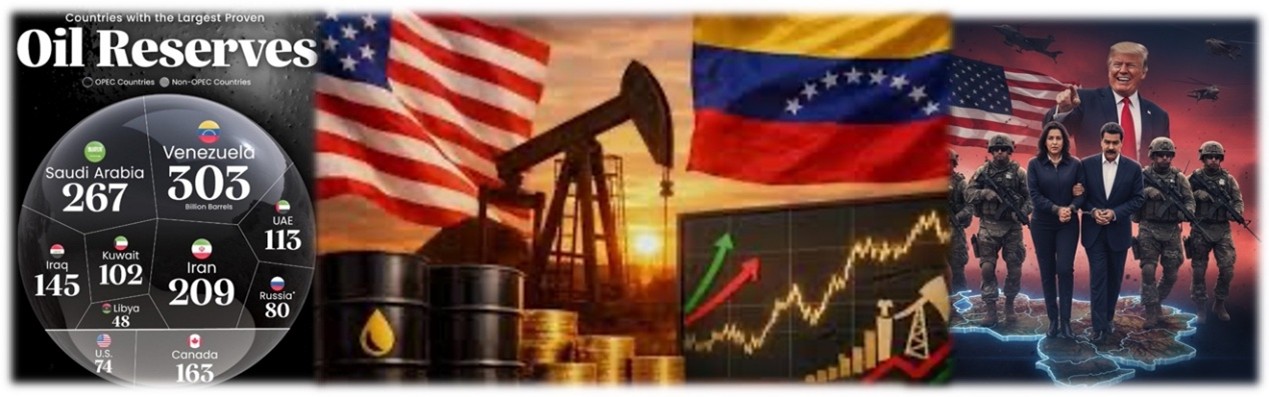
The U.S. “running” Venezuela’s oil after the capture of President Maduro on 3 January 2025 (BBC, 2025), is likely to slow the global renewable energy transition. The assertion is grounded in the expectation that political and military control over Venezuela’s vast oil reserves will reinforce fossil fuel market dynamics and dampen incentives for rapid deployment of clean energy technologies. Evidence supporting this trend includes:
- Increased Venezuelan oil supply and downward price pressure weaken the economic case for renewables. If Venezuela’s oil production recovers under U.S. influence, production could rise from current levels toward 1.3–1.4 million barrels per day (bpd), potentially reaching 2.5 million bpd over the next decade, exerting downward pressure on global crude prices by up to USD 4 per barrel by 2030. Lower oil prices reduce the relative competitiveness of renewable energy and delay investment in alternative sources, as fossil fuels become relatively cheaper for energy markets (Reuters, 2025).
- Geopolitical control over Venezuela’s crude may reinforce existing oil infrastructure and extend the lifespan of hydrocarbon dependency. Reports indicate that U.S. refineries and oil firms are poised to benefit from increased access to Venezuelan heavy crude, bolstering fossil fuel production and refining capacity. This emphasis on maximizing existing oil flows can divert capital away from renewables (Reuters2, 2025).
- Political risk and supply disruption concerns may slow strategic shifts toward low-carbon systems. Military intervention and ongoing sanctions have raised uncertainty in energy markets, encouraging policymakers to prioritize short-term energy security through legacy oil investments rather than accelerate long term renewable transition (Discovery Alert, 2025).
In light of these dynamics that drastically dampens oil revenues, Arab states should reinforce their renewable agendas by accelerating clean energy targets, diversifying export portfolios, and strengthening regional cooperation on climate policy. Emphasizing investment in renewables and energy efficiency can mitigate the risks of renewed fossil fuel dominance and price downfall, and support long-term economic resilience.