
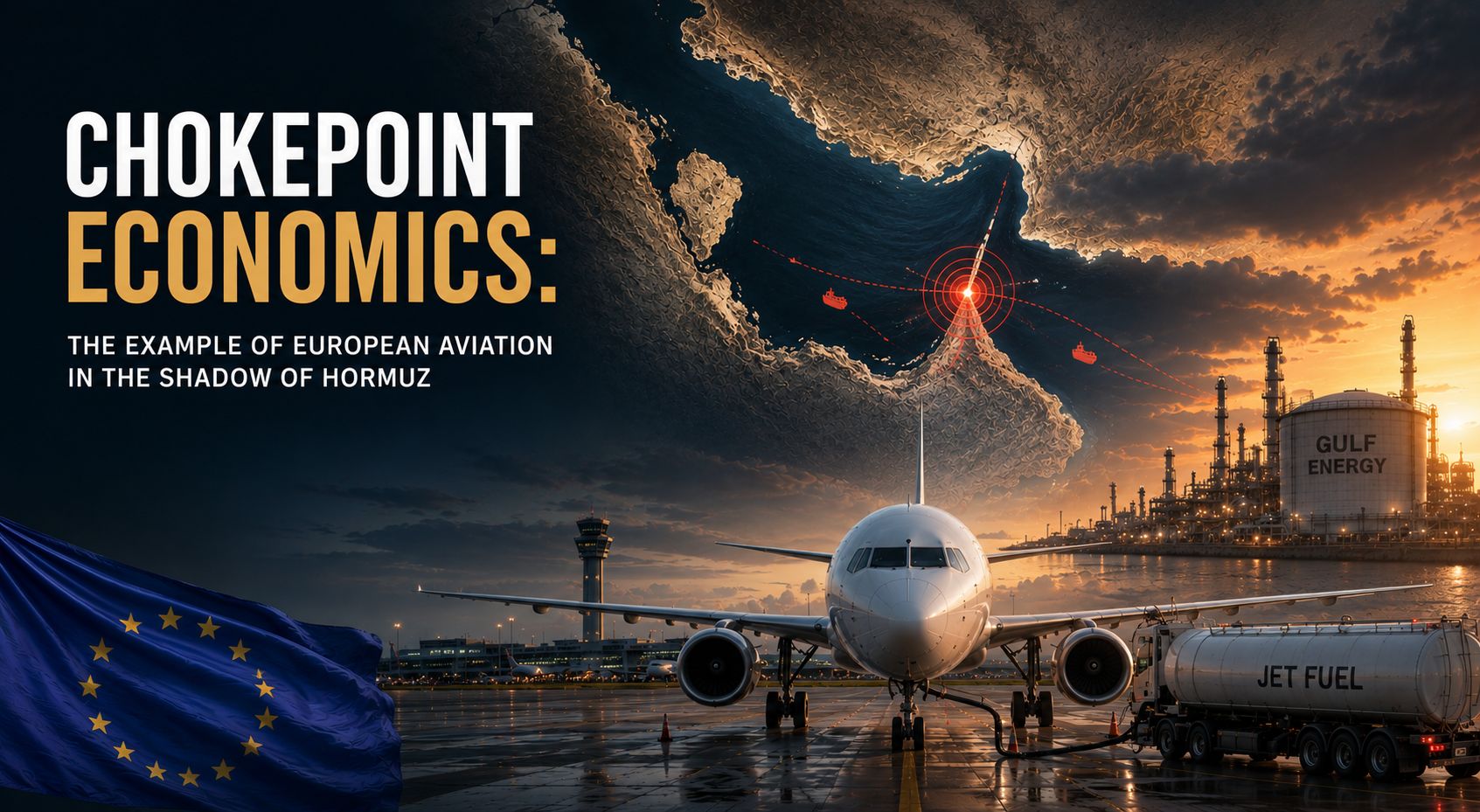
Chokepoints are defined as strategic, constricted bottlenecks—either geographic or systemic—that control the flow of traffic, commerce, or information. Because they force everything through a narrow funnel, they hold immense influence over global trade, supply chains, or data, etc. Since they force movement through a confined area, chokepoints create natural bottlenecks that hold massive geopolitical, economic, and strategic power.
When regional instability boils over—as seen with the total halt of traffic through the Strait of Hormuz—the global aviation system doesn’t just slow down; it faces a structural breakdown.
Europe typically sources 25% to 40% of its jet fuel straight from Persian Gulf refineries, and its emerging jet fuel insecurity illustrates how geopolitical chokepoints are increasingly shaping economic resilience, exposing the vulnerability of highly globalized transport systems to disruptions in energy supply chains. This is evidenced by:
- The closure and instability surrounding the Strait of Hormuz has revealed Europe’s structural dependence on imported jet fuel, particularly from Gulf producers. Decades of refinery downsizing and prioritizing efficiency over redundancy left European aviation exposed to external shocks, especially during periods of geopolitical conflict (The Telegraph, 2026).
- Multiple major airlines have openly acknowledged growing operational pressure. Ryanair for example, have recently warned of potential fuel-related flight disruptions, while Lufthansa stated that kerosene would remain scarce and expensive throughout the year. Meanwhile, airport operators cautioned EU officials that prolonged disruption at Hormuz could trigger “systemic shortages” across Europe’s aviation sector. These warnings reflect not only price inflation but also declining confidence in supply predictability and inventory visibility (The Telegraph, 2026).
- Although airlines have temporarily stabilized the situation through alternative sourcing, hedging strategies, and increased imports from the United States and West Africa, the crisis has already pushed jet fuel prices sharply higher and increased the likelihood of fare increases, route reductions, and long-term market volatility. Airlines remain concerned about the durability of these emergency measures if geopolitical instability persists into late 2026 or beyond (Reuters, 2026; Financial Times, 2026).
Ultimately, the situation demonstrates that energy security can no longer be separated from transportation security or economic stability.
Even as the world discusses transitioning to Sustainable Aviation Fuel (SAF) to meet net-zero targets, the aviation industry remains bound to conventional kerosene. Recognizing this, Gulf giants like QatarEnergy and ADNOC are already aggressively investing in SAF infrastructure to ensure that whether the future is fossil or synthetic, the world will still have to buy its aviation energy from the Gulf.
Gulf states remain central to global aviation fuel flows, meaning regional instability not only affects local economies but also amplifies the strategic importance of Arab energy infrastructure, maritime routes, and geopolitical influence within global trade and mobility systems.