
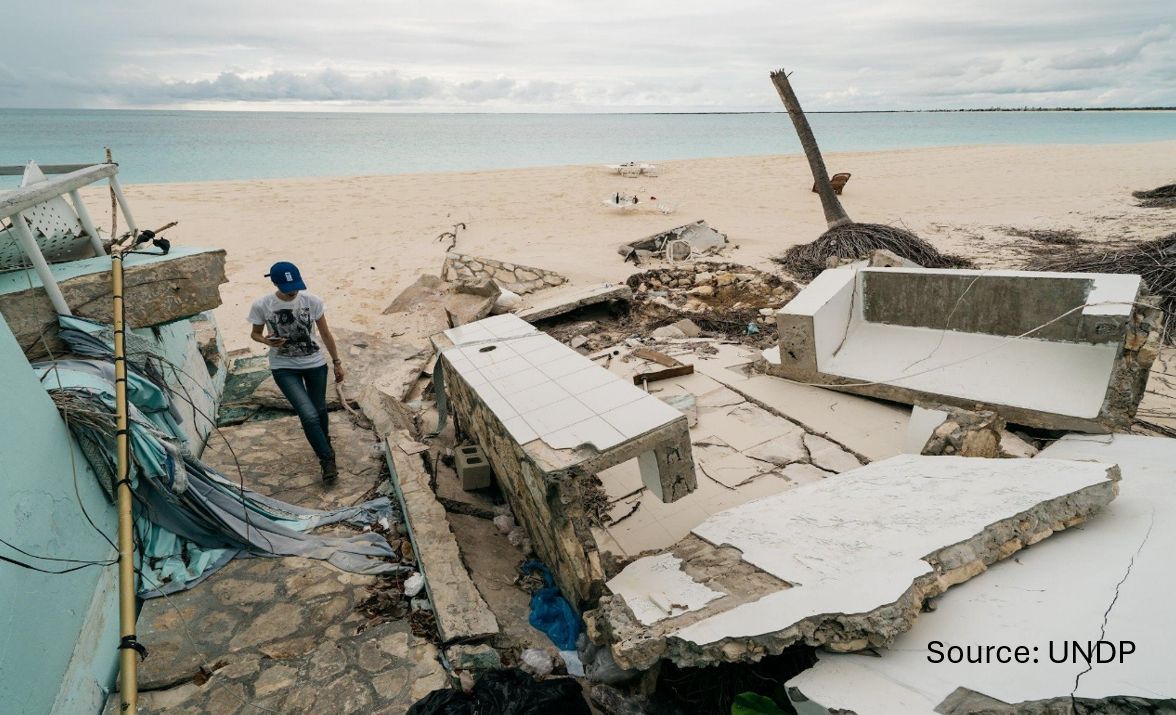
Extreme weather is no longer only an environmental risk, it is becoming a structural global economic shock. New analysis on 2 June 2026 by Bloomberg Intelligence estimates that extreme weather could drive more than USD 20 trillion in global spending over the next decade, as governments, insurers, companies, municipalities, and households absorb rising costs from disasters, adaptation, energy efficiency, and climate security (Bloomberg Intelligence, 2026). The economic damages of climate change are already disastrous, and delaying action will only make them more expensive. Therefore, cutting climate and development finance, particularly under the influence of U.S.-driven climate finance and aid reductions, is economically short-sighted and politically dangerous. This is evidenced by:
1- Climate damages are already draining public and private finances.
Extreme-weather costs reached around USD 1.4 trillion last year, equivalent to about 1.2% of global GDP. In the United States alone, 23 weather events caused at least USD 1 billion in damages, while rising insurance premiums are redirecting capital away from more productive uses. (Bloomberg Intelligence, 2026; Insurance Journal, 2026).
2- The cost burden is shifting to those least able to pay.
Municipalities and vulnerable populations are among the most exposed groups, while weaker federal disaster support could pressure state and local credit ratings. This means climate damages are increasingly becoming a fiscal stability issue, not only a disaster-response issue (Bloomberg Intelligence, 2026; Fitch Ratings, 2026).
3- Cutting climate finance now multiplies future losses.
At the same time that climate costs are escalating, international climate finance is being cut led by Trump’s US, weakening the ability of vulnerable countries to prepare before climate shocks become disasters (Oxfam, 2026). The world is cutting prevention just as the cost of damage is accelerating.
Climate finance should be seen as essential economic protection, not optional aid. Cutting support for adaptation, early warning, resilient infrastructure, water security, and disaster preparedness will only increase future recovery, insurance, debt, and humanitarian costs. This is especially urgent for Arab countries, where heat stress, water scarcity, food insecurity, coastal risks, and fiscal pressures are rising. As international funding becomes less reliable, the region must strengthen regional financing, climate budget tracking, disaster-risk finance, resilient investment pipelines, and South–South cooperation.