
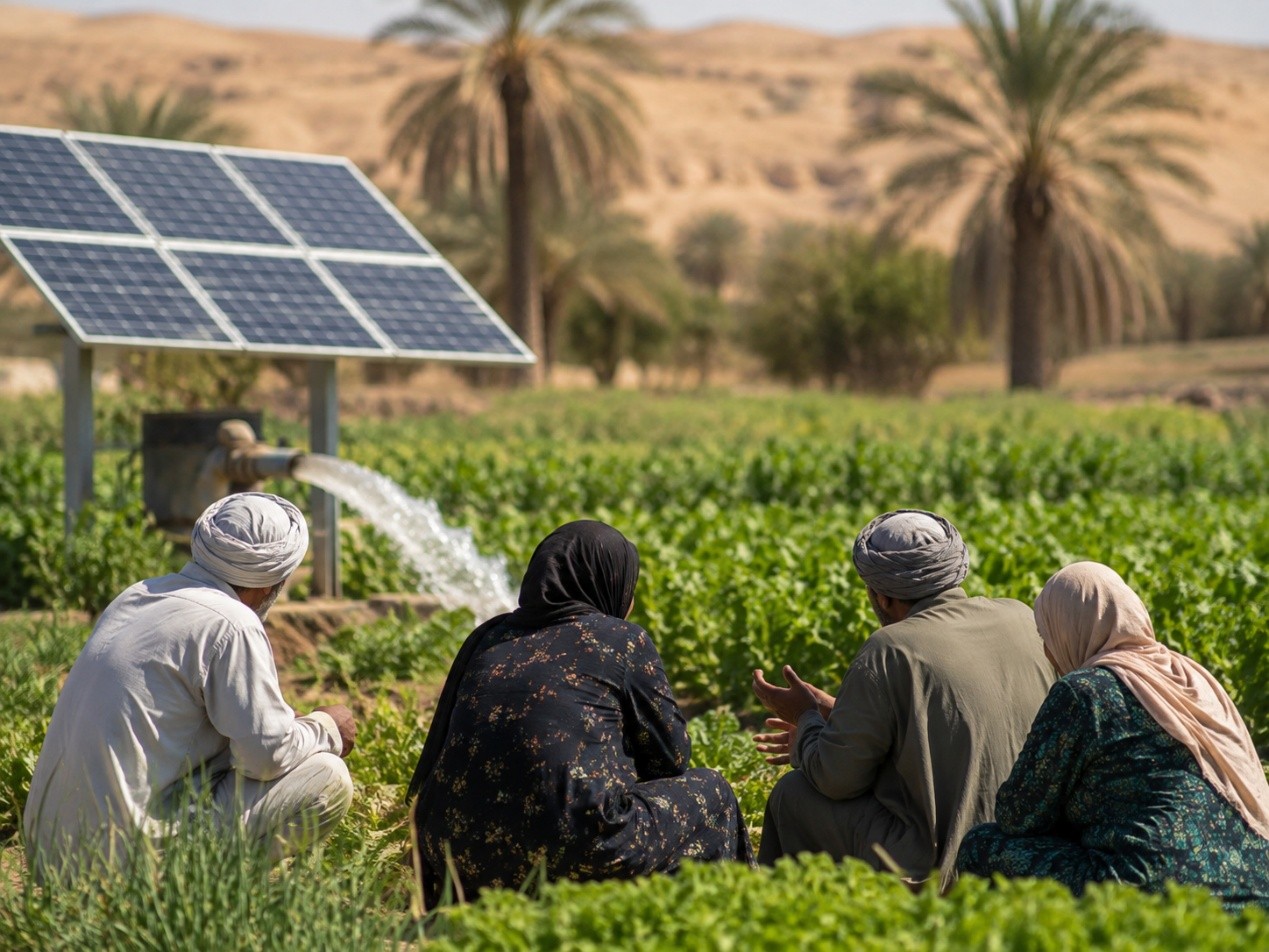
Scaling up climate finance is essential, but finance alone does not guarantee equitable or lasting climate outcomes. Climate interventions operate within social realities shaped by unequal access to resources, household decision-making, and cultural norms. Unless these factors are addressed throughout the project cycle, even well-funded interventions may reinforce inequalities or fail to sustain impact. The challenge is therefore not only to mobilize more finance, but to make climate action gender-responsive from planning and design through implementation and monitoring (IISD, 2026). This is evidenced by:
- Gender considerations must shape planning and design from the outset (IISD, 2026). Climate interventions should begin with gender and socio-cultural analysis to understand differences in access to land, finance, assets, information, mobility, labour, and decision-making.
- Transformative implementation must address the wider social environment. Projects’ approaches must also be adapted to local socio-cultural realities rather than applying standardized solutions across communities.
- Success should be measured by changes in agency and resilience, not only delivery (GCF, 2026). Beyond finance disbursed, equipment distributed, or people trained, monitoring should assess whether women gain greater influence over decisions, income and productive assets; access new economic opportunities; reduce climate vulnerability; and sustain project-supported practices over time.
Climate finance delivers greater and more sustainable impact when gender-responsive and transformative approaches are embedded across the full project cycle—from needs assessment and budgeting to implementation, monitoring, learning, and sustainability.
Al Murunah+ project in Egypt provides a practical example. By combining climate-resilient livelihoods with gender transformative interventions, community-based financing, and continuous field monitoring, the project considers not only whether assets are delivered, but whether women can access, maintain, and benefit economically from them. It demonstrates that transformative climate impact depends not simply on how much finance is provided, but on how interventions respond to, and help reshape, the gender and social dynamics determining who benefits.
References
IISD (2026). “When Climate Finance Scales, Does Impact Scale With It?” IISD SDG Knowledge Hub, 6 August 2026.
Green Climate Fund Independent Evaluation Unit (2026). Evaluations of gender approaches, climate information and early-warning interventions, and readiness programmes.