
Insights from H.E. Dr. Mohamed Abdel Aty on Water Resources Management and Water Security in Egypt
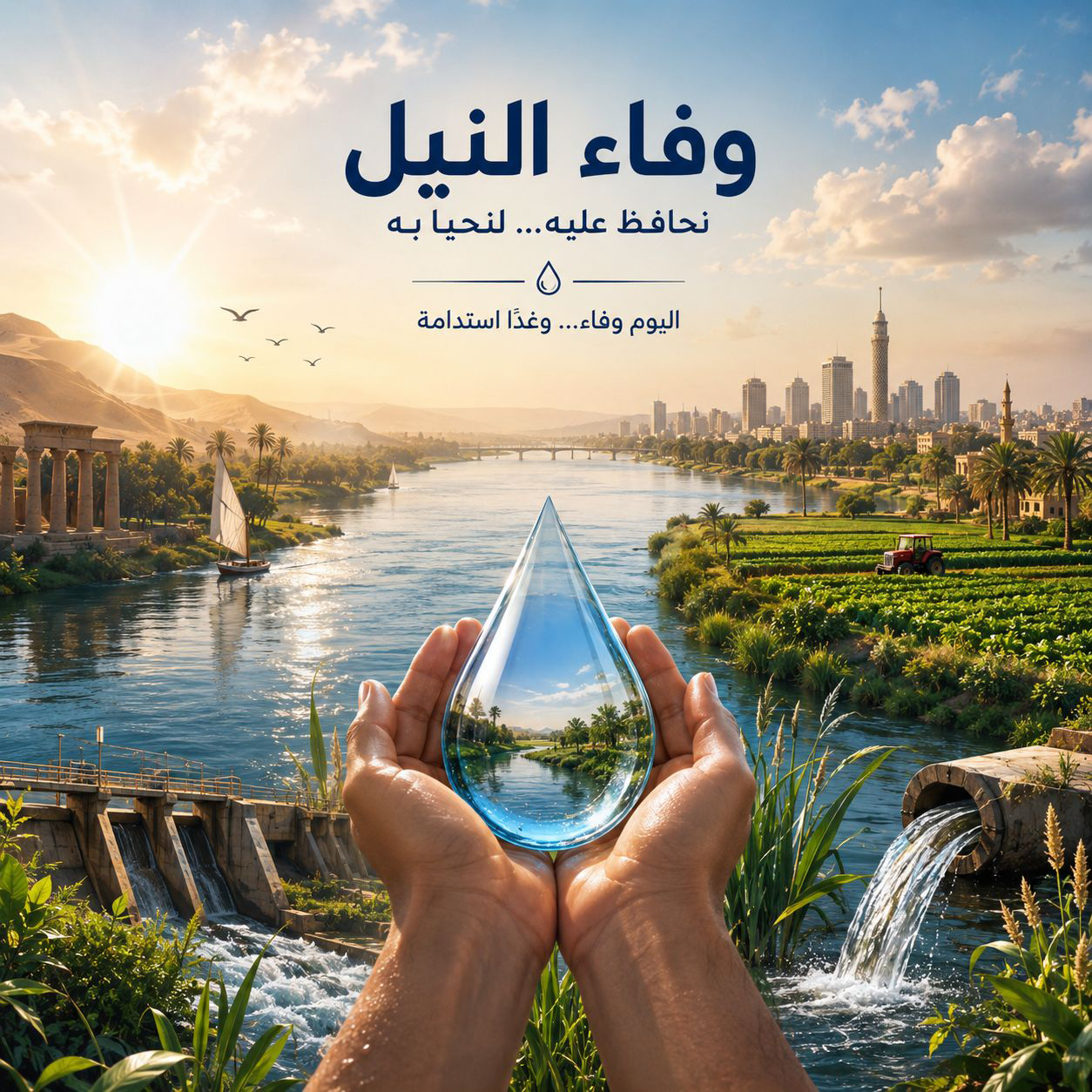
Nile Loyalty Day holds special significance for Egyptians—not only as a historic celebration of the Nile River, but also as an opportunity to renew awareness of the importance of water and the need to protect and manage it efficiently. In this context, H.E. Dr. Mohamed Abdel Aty, former Minister of Water Resources and Irrigation, emphasized that the transformations taking place in Egypt’s water system have made it necessary to move beyond reliance on seasonal water availability toward building a more resilient system capable of sustainable water use and responding to droughts, floods, and extreme climate-related shocks.
From Water Management to Water-Use Efficiency
Water-use efficiency has become a central pillar of water resources management in Egypt, particularly amid growing pressures on available resources. According to H.E. Dr. Mohamed Abdel Aty, improving efficiency does not depend on a single intervention, but rather on an integrated sequence of complementary measures, beginning with the rehabilitation and lining of canals, followed by the development of water conveyance and distribution systems within agricultural areas, and ultimately the adoption of modern, smart, and advanced irrigation systems.
Integrating these measures aims to improve the efficiency of the water and land management system while enabling the agricultural sector to achieve higher productivity through more efficient use of available resources.
Water Reuse: A Resource That Should Not Be Wasted
Water reuse is one of the key pillars of Egypt’s water resources management strategy. As highlighted by H.E. Dr. Mohamed Abdel Aty, Egypt is working to reuse water multiple times, including the blending of agricultural drainage water with freshwater and the treatment of higher-salinity water through major treatment facilities and projects.
In this context, projects such as New Delta, Al Mahsama, and Bahr El-Baqar demonstrate how treated water can be reused for irrigating newly reclaimed lands and supporting development in emerging agricultural areas, thereby expanding the benefits derived from every available water resource.
This approach transforms the concept of “used water” from the end of the water cycle into an opportunity to reintroduce water into the system and make further use of it.
Water Security Is a Shared Responsibility
Water security cannot be achieved by a single ministry or institution. The discussion highlights the importance of coordination among different government institutions, given the multiple uses of water and its links to agriculture, industry, housing, drinking water, inland navigation, tourism, health, the environment, and other sectors.
Achieving this requires appropriate legal and institutional frameworks, as well as cooperation among ministries, universities, the Council of Ministers, and other relevant institutions, with each sector contributing its role within an integrated system capable of responding effectively to emerging challenges.
The Goal: A More Resilient Water System
With population growth and increasing water demand, the challenge is no longer limited to ensuring water availability. It increasingly involves improving water-use efficiency, increasing water productivity, strengthening resilience to shocks, and ensuring that water reaches different users in the required quantities, quality, and at the appropriate time.
A central message emerging from the discussion is that water security is achieved not only by increasing available resources, but also by managing existing resources more efficiently, expanding water reuse, and strengthening coordination among institutions and society as a whole.
Conclusion
Nile Loyalty Day can go beyond the symbolism of celebrating the river to serve as a renewed reminder that water sustainability is a shared responsibility. The more efficiently every drop is used, the more widely water reuse systems are expanded, and the stronger coordination becomes across sectors, the greater Egypt’s capacity will be to address future water challenges.
Nile Loyalty is not only about celebrating a source of life; it is about fulfilling our responsibility toward it—through protection, conservation, reuse, and sustainable management for generations to come.
Source: General Program Radio interview with H.E. Dr. Mohamed Abdel Aty, former Minister of Water Resources and Irrigation, and Senior Regional Consultant for Water Resources Management at CEDARE,. marking Nile Loyalty Day – 15 August.