
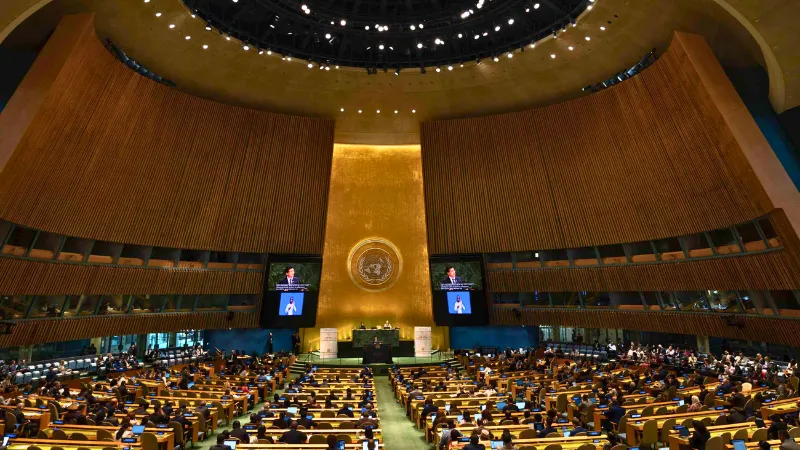
The 2026 session of the High-level Political Forum on Sustainable Development (HLPF), held from 7-15 July at UN Headquarters in New York, convened under the theme “Transformative, equitable, innovative and coordinated actions for the 2030 Agenda.” With only four years remaining until the 2030 deadline, the Forum represented a critical moment for Member States to share their plans for accelerating SDG implementation. Multiple countries presented Voluntary National Reviews (VNRs), with several presenting for the third or fourth time, demonstrating growing institutional maturity in SDG monitoring and reporting. UN Secretary-General António Guterres challenged delegates with a simple but urgent message: “Let’s make these final years count.”
The current landscape for developing countries presents significant challenges, with the UN Secretary-General’s report indicating that only 36 per cent of SDG targets are on track or making significant progress, while one in seven targets have regressed below their 2015 baselines. Conflicts, climate disasters, and global energy crises have reversed hard-won gains, particularly affecting African countries, Least Developed Countries (LDCs), Landlocked Developing Countries (LLDCs), and Small Island Developing States (SIDS). Recent official development assistance (ODA) decline has further constrained fiscal space, while the USD 4 trillion SDG financing gap continues to widen. However, the Forum also revealed important opportunities. Developing countries reported innovative approaches to domestic resource mobilization, integrated water-energy projects (such as combined desalination and renewable energy generation), and improved data systems for evidence-based planning. The growing support for moving beyond GDP-based metrics, particularly through the Multidimensional Vulnerability Index (MVI), offers hope for more responsive and equitable access to concessional finance. Countries like Jamaica demonstrated that multi-year fiscal reform can create space for resilient development even in the face of catastrophic hurricanes.
For Arab countries, the HLPF 2026 outcomes offer several strategic insights. The Arab Regional Forum on Sustainable Development chair emphasized that “water security is at the heart of sustainable development in the Arab region,” aligning with the upcoming UN Water Conference in Abu Dhabi (December 2026) co-hosted by the United Arab Emirates and Senegal. This presents a significant opportunity for Arab states to shape the global water agenda beyond 2030. The Forum also highlighted the importance of economic diversification, with Bahrain reporting that no single sector now contributes more than 20 per cent of its GDP—a model for oil-dependent economies. The growing emphasis on digital transformation and AI governance suggests Arab countries should prioritize investments in digital infrastructure and skills development to remain competitive. Additionally, the increasing focus on South-South cooperation and triangular partnerships offers avenues for Arab states to share development experiences, particularly in renewable energy deployment and water management technologies. The 2027 SDG Summit will launch negotiations on the post-2030 framework, making it imperative for Arab countries to actively participate in shaping a new development architecture that addresses their specific vulnerabilities, including water scarcity, youth unemployment, and the impacts of conflict and displacement.
Cover photo: ©IISD/ENB – Kiara Worth