
Overview
As of April 2026, the tropical Pacific resides in a state of “ENSO-neutral” conditions—a deceptive atmospheric ceasefire. While the public notices “unseasonal” tremors, such as the intense March 2026 flash floods across the GCC and Oman, these are merely symptoms of a larger reorganization of thermal energy. Beneath the waves, the telemetry from the deep Pacific is screaming toward a shift. This is not merely the return of a recurring cycle; it is the first major discharge of a global heat battery that has been recharging at an unprecedented, human-accelerated rate.
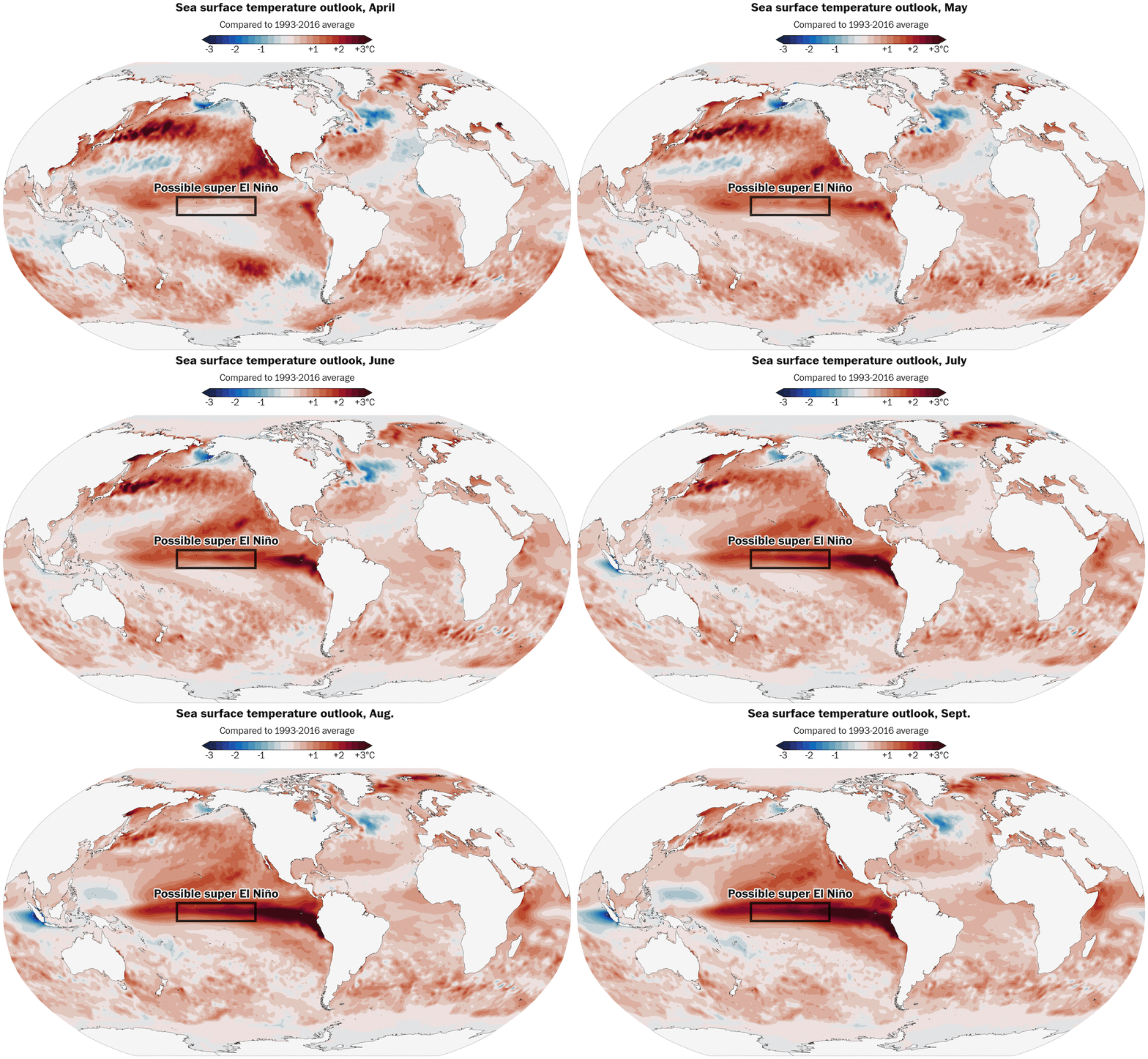
While surface sea temperatures currently hover near average, the real narrative is unfolding 300 meters below. Subsurface temperature anomalies have surged for five consecutive months, creating a “heat battery” that is beginning to discharge. The mechanism is a series of “Kelvin waves”—massive pulses of thermal energy acting as a conveyor belt moving from Indonesia toward the South American coast. As these waves surface, they suppress the normal upwelling of cold, nutrient-rich water, triggering the atmospheric feedback loops characteristic of El Niño. What makes the 2026 event scientifically jarring is the speed of the recharge. Senior climatologist James Hansen notes that having a “Super El Niño” develop so soon after the moderately strong 2023-24 event suggests that human-made warming is decreasing the time needed to “recharge” the Pacific’s thermal stores.”
The potential “Super El Niño” in 2026, characterized by sea surface temperatures in the Pacific rising 2°C or more above normal, poses a severe threat to the Arab region, expected to manifest in late 2026 and persist into 2027. This event, occurring amid heightened regional tensions and a post-Iran conflict environment, could severely impact water security, agricultural output, and socioeconomic stability.
Assessment
The 2026 Super El Niño, combined with long-term climate change, is projected to push regional temperatures to record highs. While some regions may experience flooding downpours, potentially affecting parts of the Middle East, a “super” event is generally associated with severe, widespread droughts in arid and semi-arid zones, exacerbating existing water stress. The event threatens to exacerbate the water shortages lingering from the 2025 drought, particularly impacting agricultural output and domestic water supply, with risks of drought-related disputes in countries like Iraq, Syria, and Lebanon.
Figure 1: Sea Surface Temperature Outlook (April to September 2026), Source: The Washington Post, Data Source: ECMWF
Strategic Implications for the Arab Region
The 2026 El Niño hits at a time of, or just after, major supply chain disruptions (notably around the Strait of Hormuz). This creates a “perfect storm” for food insecurity, as climate-driven crop failures combine with high fertilizer and fuel costs. The resulting scarcity of water and food, particularly in agricultural regions, is expected to fuel community-level tensions, localized conflicts, and water-related protests. Extreme heat and potential flash floods could threaten infrastructure, particularly in cities experiencing rapid urbanization. Many Arab nations face already depleted fiscal buffers, limiting their ability to respond to simultaneous climate and economic shocks.
Key Regional Vulnerabilities
The Arab region is highly vulnerable to global food price volatility, which a super El Niño is likely to increase (e.g., rice, sugar, oil seeds). The intersection of conflict (e.g., Iran) and El Niño disrupts both the production and transport of nitrogen fertilizers, which are critical for regional food production. With 19 Arab countries already below the water poverty threshold, a super El Niño directly threatens essential water supplies.
Strategic Outlook
The 2026 Super El Niño will likely demand enhanced, proactive resource management, including accelerating investments in desalination and sustainable agriculture, securing alternative food supply routes, and strengthening social safety nets to manage potential social unrest.
To understand the peril of 2026, we must look at the “escalator” metaphor: Global warming is the moving escalator, and El Niño is the act of jumping while riding it. We are reaching record heights because the jump is powerful, but primarily because the escalator itself has shifted into high gear. As we move toward the peak of this event in early 2027, we must ask if our Arab infrastructure is prepared for a reinforced phenomenon acting on a planet with higher sensitivity and lower aerosol protection. Are our standard procedures for agricultural and humanitarian relief robust enough for a regime shift? We are watching a predictable crisis meet an unprepared world. The question is no longer what is coming, but whether we are finally ready to act on the telemetry.