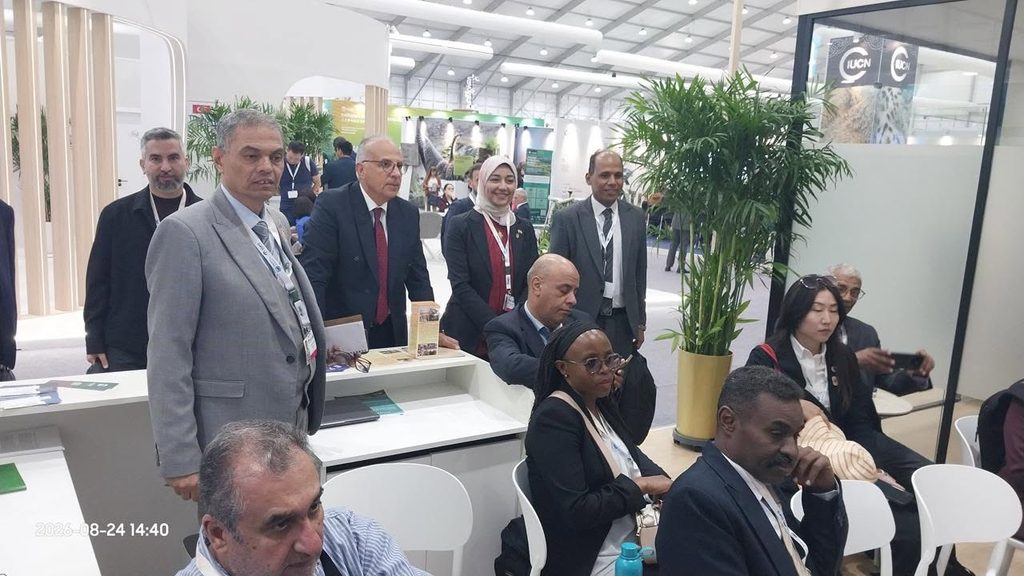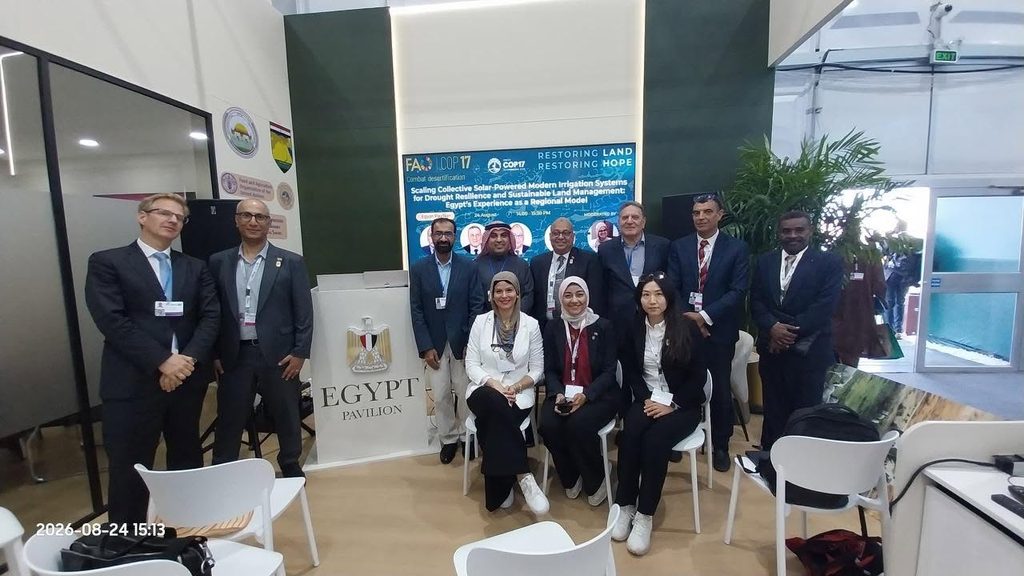
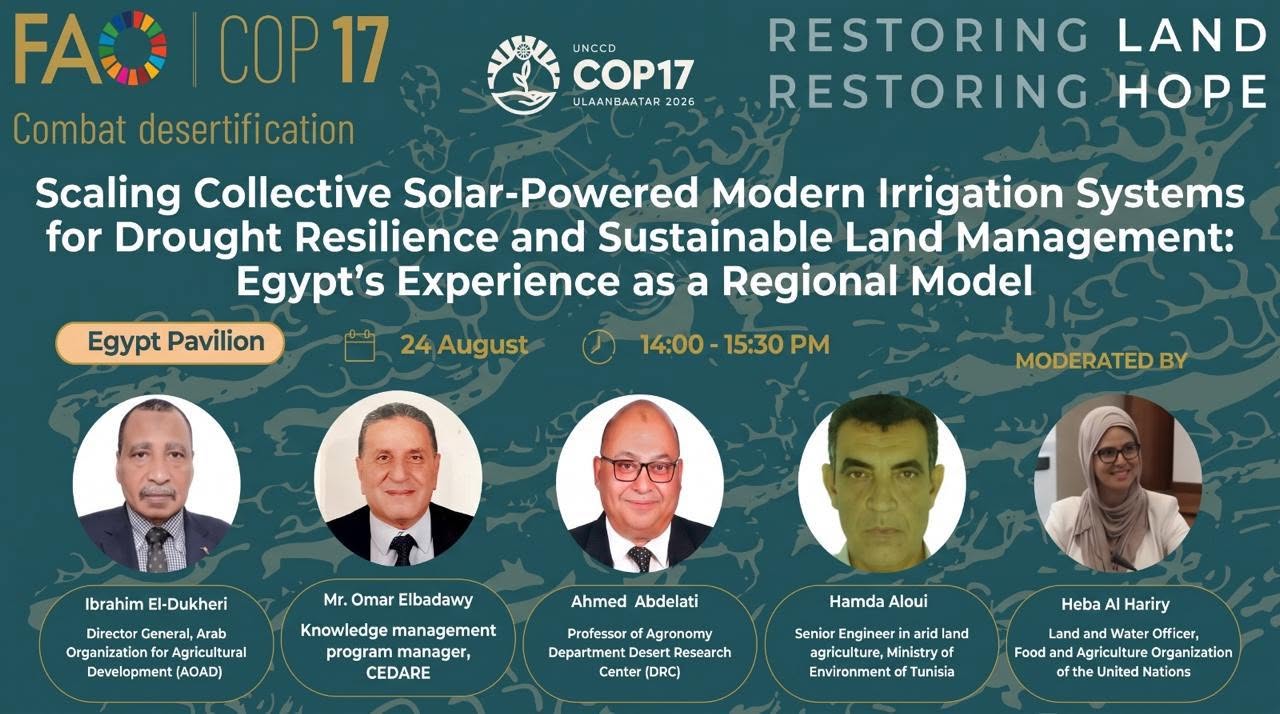
The Centre for Environment and Development for the Arab Region and Europe (CEDARE) participated in the 17th session of the Conference of the Parties to the United Nations Convention to Combat Desertification (UNCCD COP17), held in Ulaanbaatar, Mongolia, from August 17 to 28, 2026.
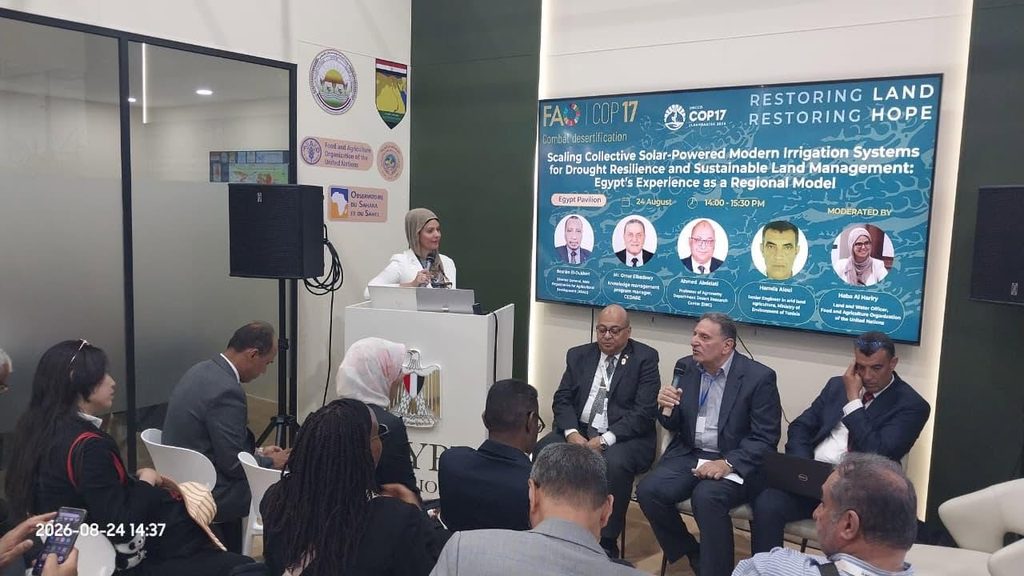
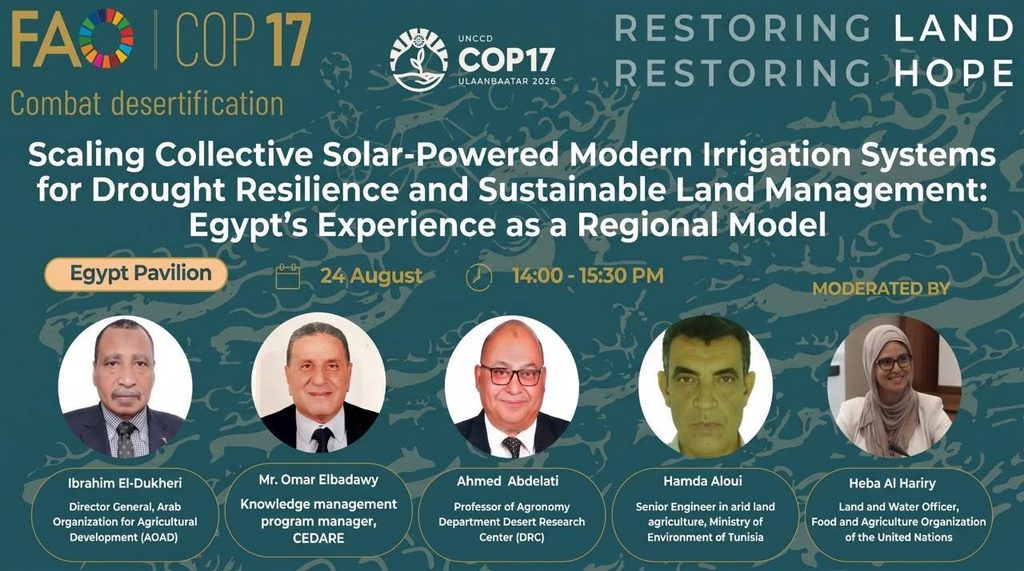
During the conference, Dr. Omar El-Badawy, Water and Land Resources Expert at CEDARE, presented the Egyptian model for implementing collective, solar-powered modern irrigation systems. He highlighted the model’s success in enhancing drought resilience and supporting sustainable land management, as well as efforts to scale up and replicate this experience.
The session was organized in collaboration with the Food and Agriculture Organization of the United Nations (FAO), the Ministry of Water Resources and Irrigation of the Arab Republic of Egypt, the International Water Management Institute (IWMI), and the Arab Organization for Agricultural Development (AOAD), alongside experts from the Republic of the Congo.
The workshop addressed several key themes, including enhancing resilience through using solar energy for irrigation, thereby contributing to improved productivity and the empowerment of smallholder farmers in rural areas. It also discussed the Water-Energy-Food-Ecosystems (WEFE) Nexus, aiming to maximize productivity and strengthen efforts to adapt to the impacts of climate change.
Participants emphasized the importance of strengthening cooperation among African countries to address the challenges of land degradation and desertification. They also highlighted the need to support sustainable investment by establishing effective institutional governance frameworks, enhancing integrated resource management, fostering collective action, and securing the necessary funding to ensure the sustainability and scale-up of green investments.
These efforts contribute to advancing sustainable solutions for water and food security, strengthening resilience to climate change, and promoting the sustainable management of natural resources in the long term.