
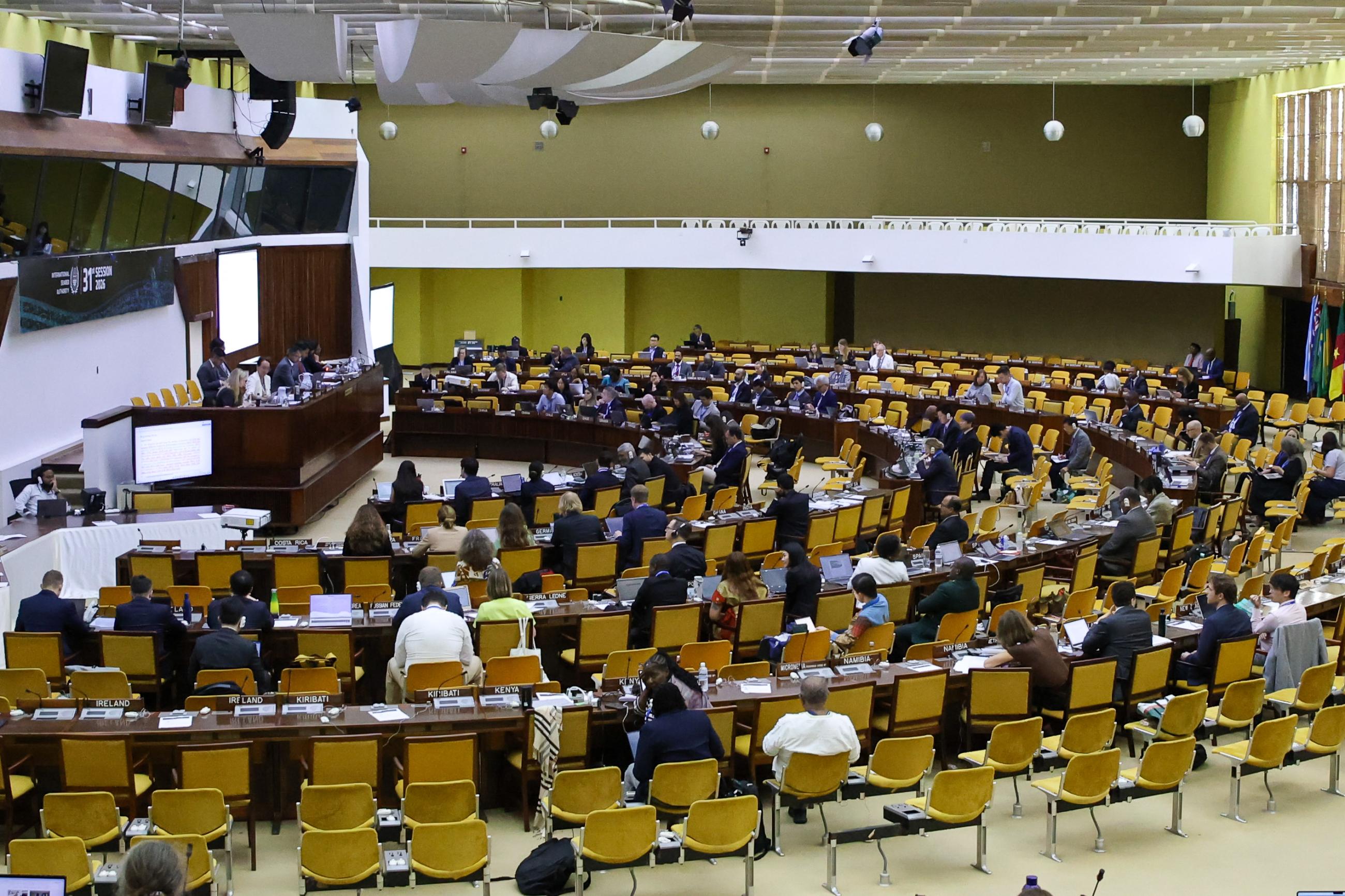
The 31st annual session of the International Seabed Authority (ISA), held in two parts in Kingston, Jamaica (March 9-19 and July 13-31, 2026), represented a critical crossroads for sustainable development and environmental protection in the global ocean commons. At the heart of the negotiations lies a fundamental tension: the growing global demand for critical minerals essential for the energy transition versus the profound scientific uncertainty surrounding deep-sea ecosystems and the potentially irreversible consequences of commercial mining activities. The session unfolded against a backdrop of escalating environmental concern, with 46 countries now supporting a moratorium or precautionary pause on deep-sea mining, reflecting widespread recognition that the precautionary principle must guide decision-making where knowledge gaps remain substantial. The deliberations highlighted the interconnected challenges of protecting marine biodiversity, ensuring intergenerational equity, and upholding the principle of the common heritage of humankind – all central pillars of the 2030 Agenda for Sustainable Development and its commitment to conserve and sustainably use the oceans (SDG 14). The concurrent issuance of provisional orders by the Seabed Disputes Chamber of the International Tribunal for the Law of the Sea (ITLOS) in cases against the ISA, alongside intensifying concerns over unilateral mining activities outside the United Nations Convention on the Law of the Sea (UNCLOS) framework, added unprecedented legal and governance complexity to an already demanding multilateral process.
The ISA-31 sessions underscored the persistent and alarming gaps in scientific understanding of deep-sea ecosystems, their biodiversity, and their vulnerability to mining activities. As the development of environmental threshold values, regional environmental management plans (REMPs), and robust monitoring frameworks remain incomplete, significant uncertainties regarding the spatial extent of impacts, cumulative effects, ecosystem recovery times, and the effectiveness of proposed mitigation measures remain. The precautionary approach, enshrined in UNCLOS and the Rio Declaration, demands that where threats of serious or irreversible damage exist, lack of full scientific certainty shall not be used as a reason for postponing cost-effective measures to prevent environmental degradation. Yet the ISA’s progress in operationalizing this principle through binding environmental standards and enforceable compliance mechanisms remains uneven. Furthermore, governance challenges including around the rights of coastal states and Indigenous Peoples raise fundamental concerns about the legitimacy, inclusivity, and environmental integrity of the regulatory framework being developed. Sustainable development requires not only environmental safeguards but also procedural justice, meaningful stakeholder participation, and the integration of multiple knowledge systems in decision-making.
The ISA-31 sessions carry profound implications for sustainable development, particularly for developing countries. The principle of the common heritage of humankind – one of the boldest ideas in modern international law – demands that activities on the seabed and ocean floor and the subsoil thereof, beyond the limits of national jurisdiction, be carried out for the benefit of humanity as a whole, with particular consideration for developing states’ interests and needs. Yet the persistent failure to operationalize the Enterprise – the ISA’s commercial arm designed to enable direct developing country participation – and the Economic Planning Commission (EPC), tasked with assessing economic impacts on land-based mineral producers, represents a significant governance deficit that undermines the equitable and sustainable management of ocean resources. The potential overlap of areas reserved for the Enterprise with mining applications submitted outside the UNCLOS framework raises serious concerns about the integrity of the common heritage regime and the ability of developing states to benefit from deep-sea mineral resources. For developing countries, the ISA’s evolving regulatory landscape presents both strategic opportunities and environmental responsibilities. Developing countries have a vital interest in ensuring that the final Mining Code incorporates robust environmental safeguards, transparent compliance mechanisms, and equitable benefit-sharing arrangements that genuinely reach states without sponsorship relationships or contracts. The growing emphasis on cooperation between the ISA and the Agreement on Marine Biological Diversity of Areas beyond National Jurisdiction (BBNJ) – particularly on environmental impact assessments, area-based management tools, and capacity-building – offers opportunities to promote coherence and mutual reinforcement between these instruments, ensuring that marine biodiversity conservation and sustainable use are addressed holistically. Moreover, the controversy surrounding unilateral mining activities and the proposal to request an advisory opinion from International Tribunal for the Law of the Sea (ITLOS) on the legal implications of activities outside the UNCLOS framework underscore the importance of actively engaging in ISA negotiations to uphold the rule of law, protect marine ecosystems, and safeguard maritime rights and interests. As the ISA moves toward finalizing the Mining Code, the Arab region, which includes countries with significant coastlines, growing maritime interests, and in some cases land-based mineral production, should prioritize strengthening scientific capacity, enhancing participation in ISA decision-making, and advocating for a precautionary, science-based, and equitable approach to deep-sea mining governance that reflects the sustainable development principles of intergenerational equity, environmental stewardship, and inclusive multilateralism. The decisions made in the coming years will determine whether the deep seabed – the last great frontier of our planet – will be managed as a sustainable resource for all humanity or become a new arena for environmental degradation and geopolitical competition, with consequences that will reverberate across generations.
Cover Photo by IISD/ENB | Anastasia Rodopoulou