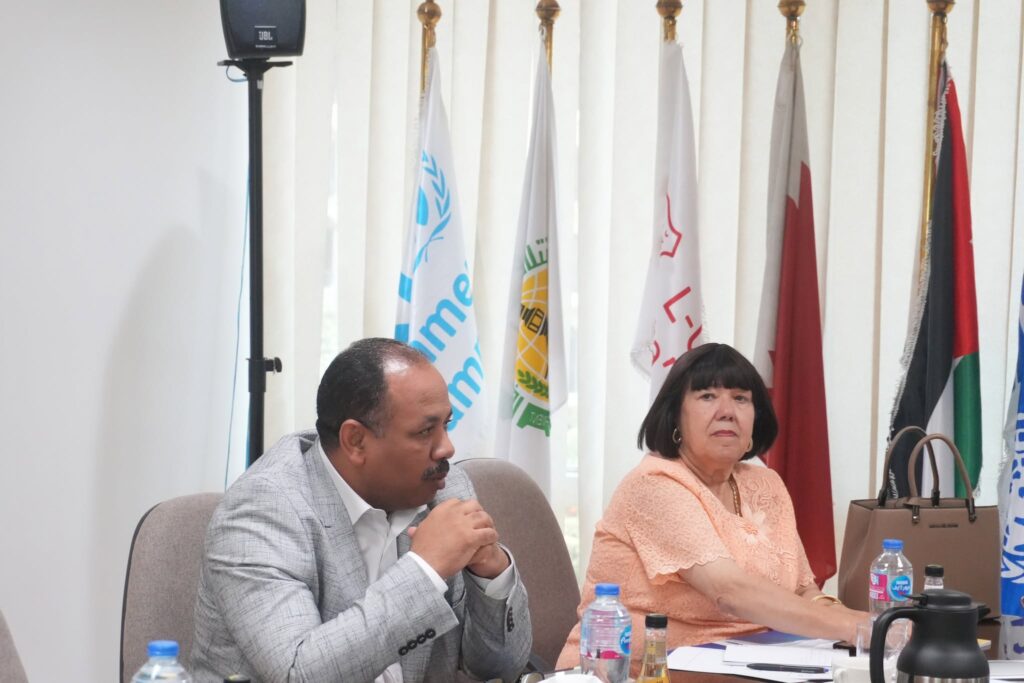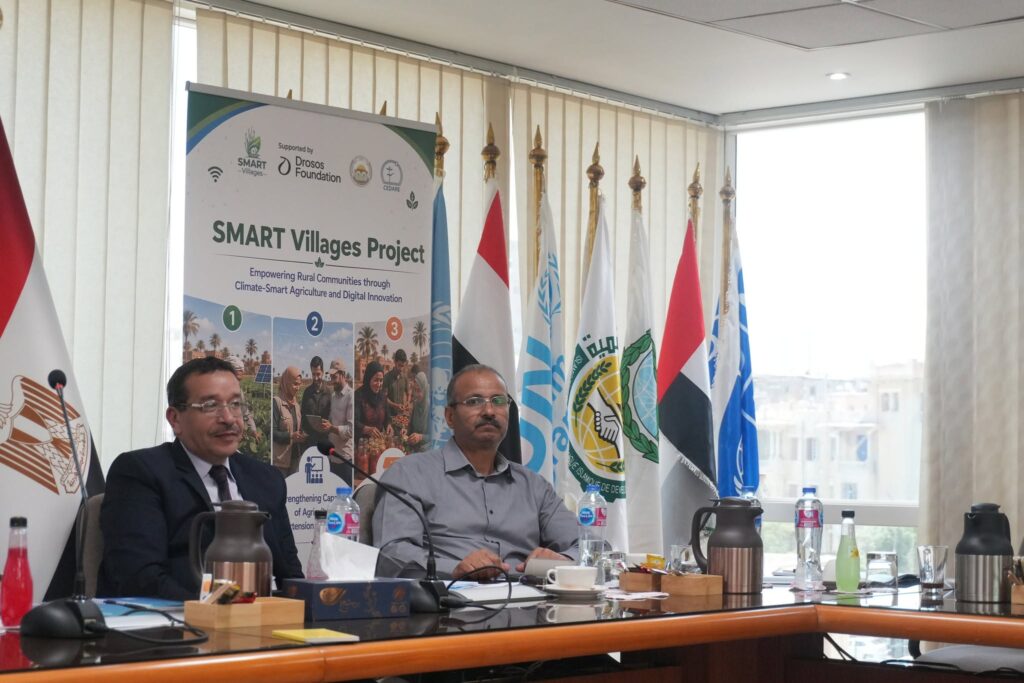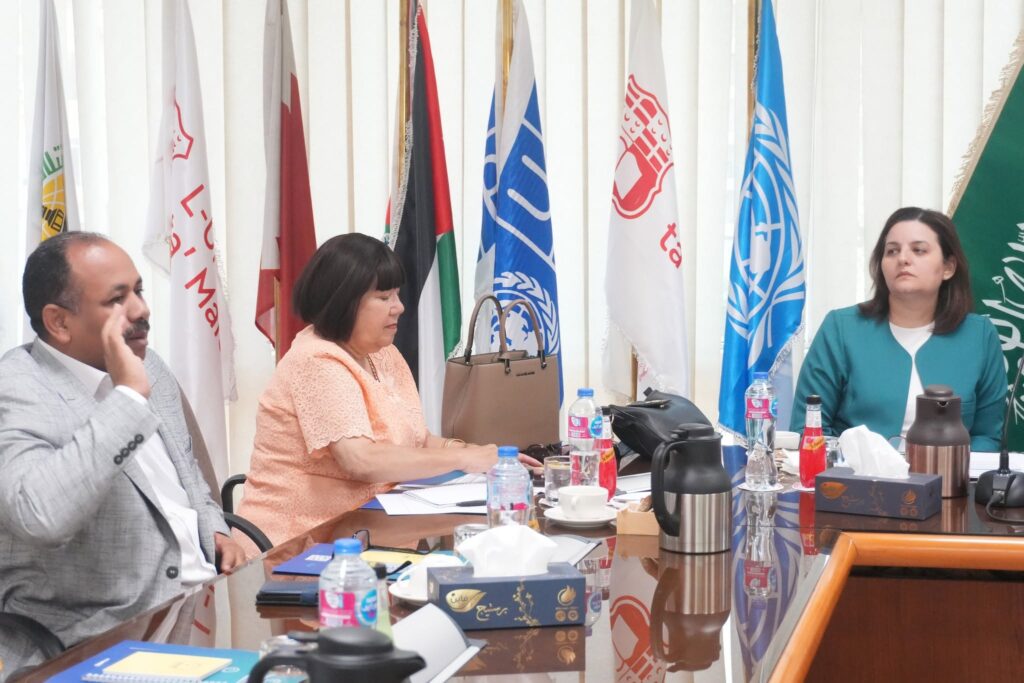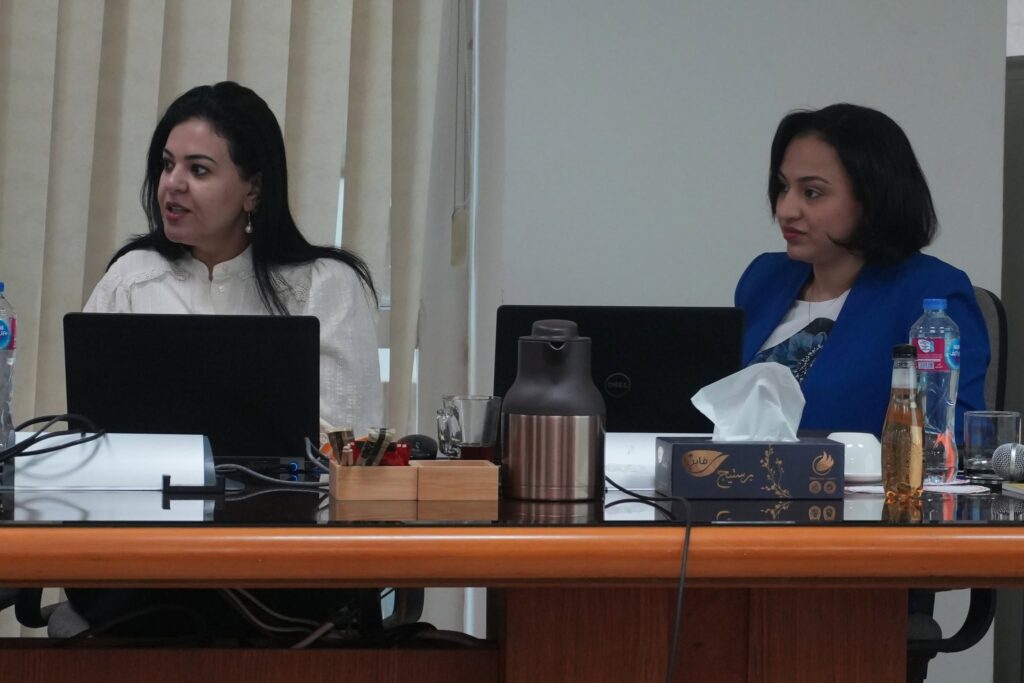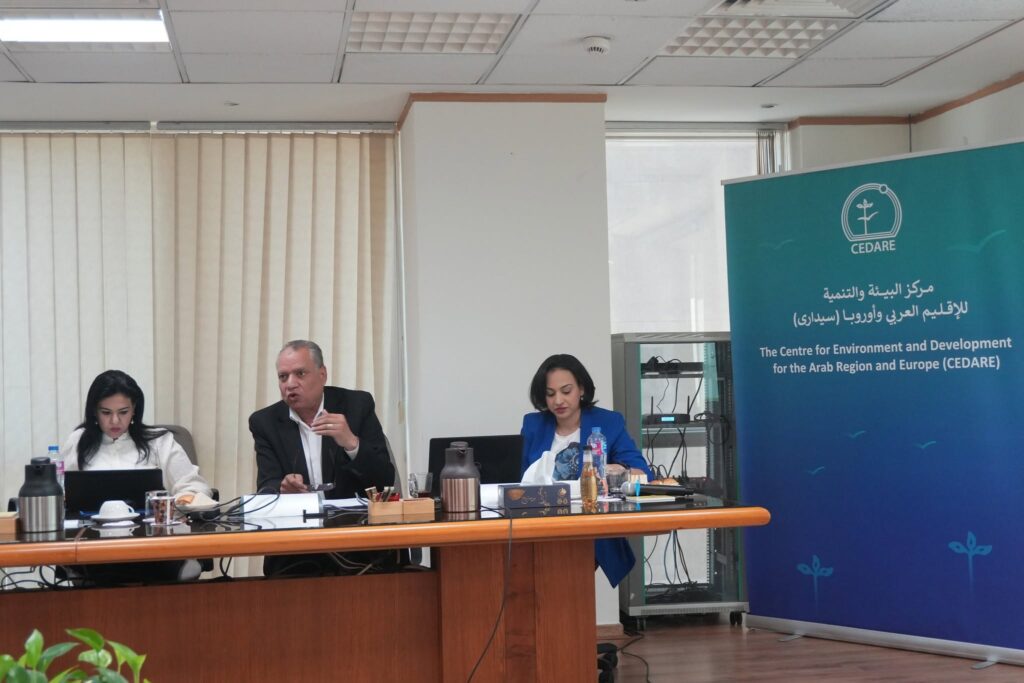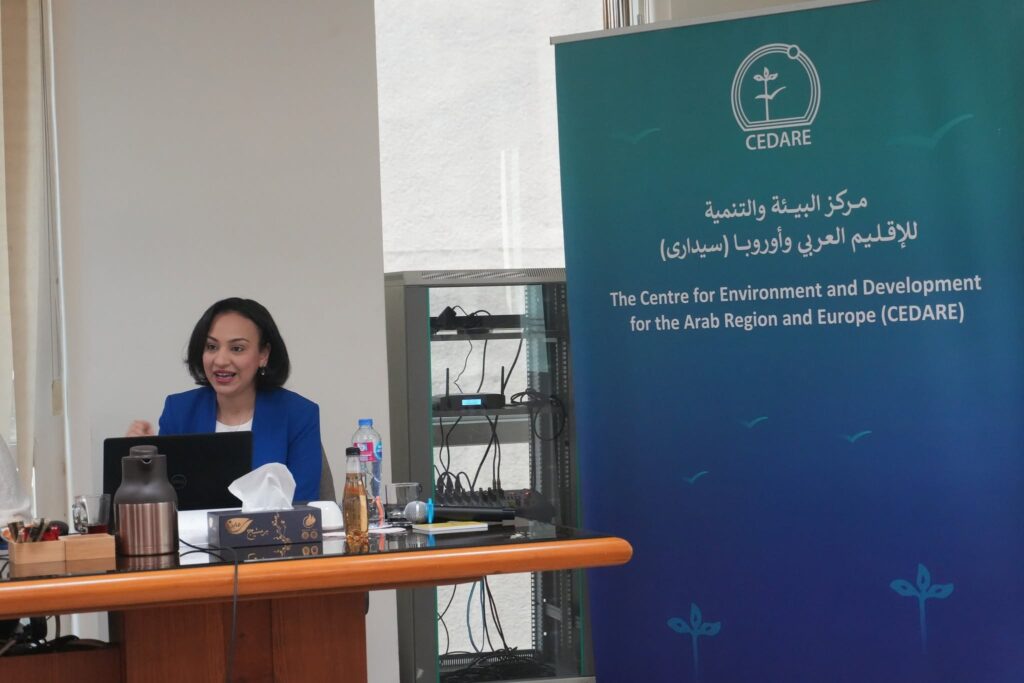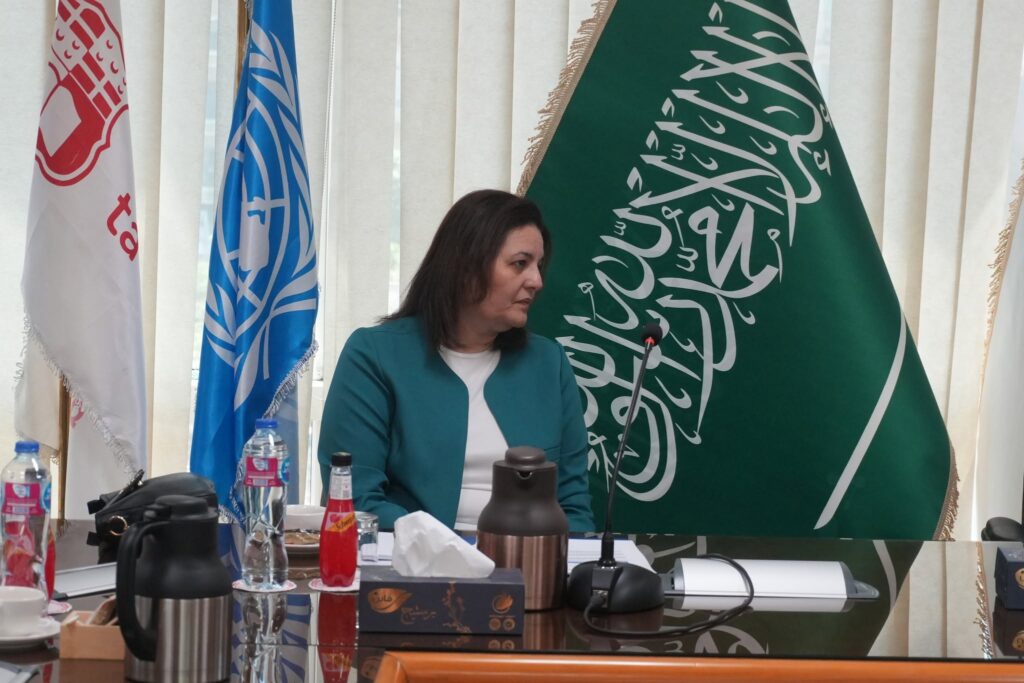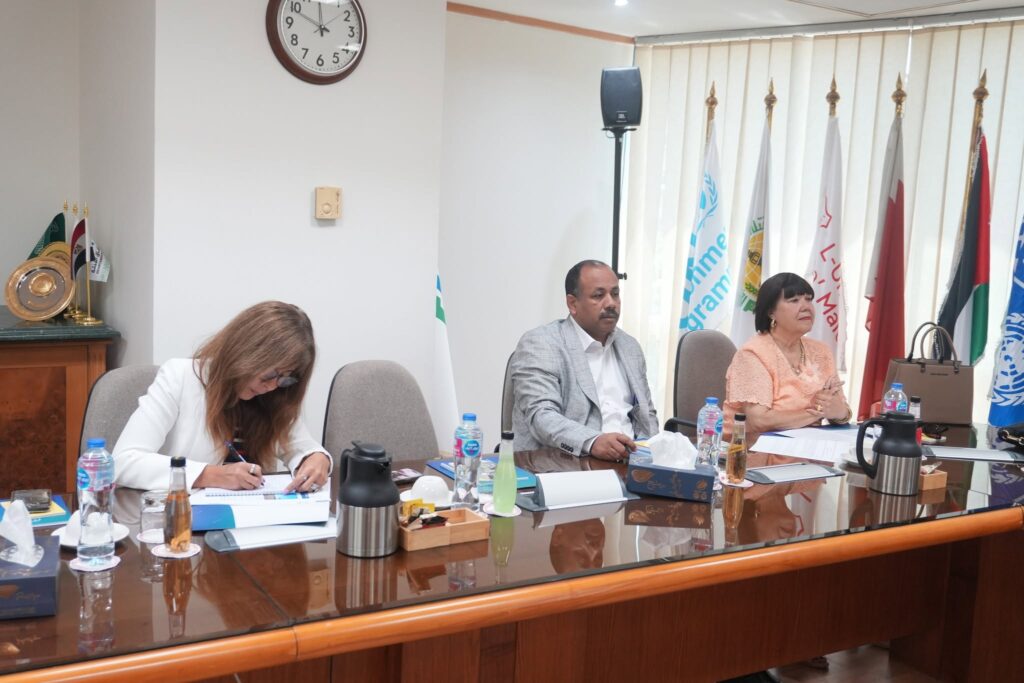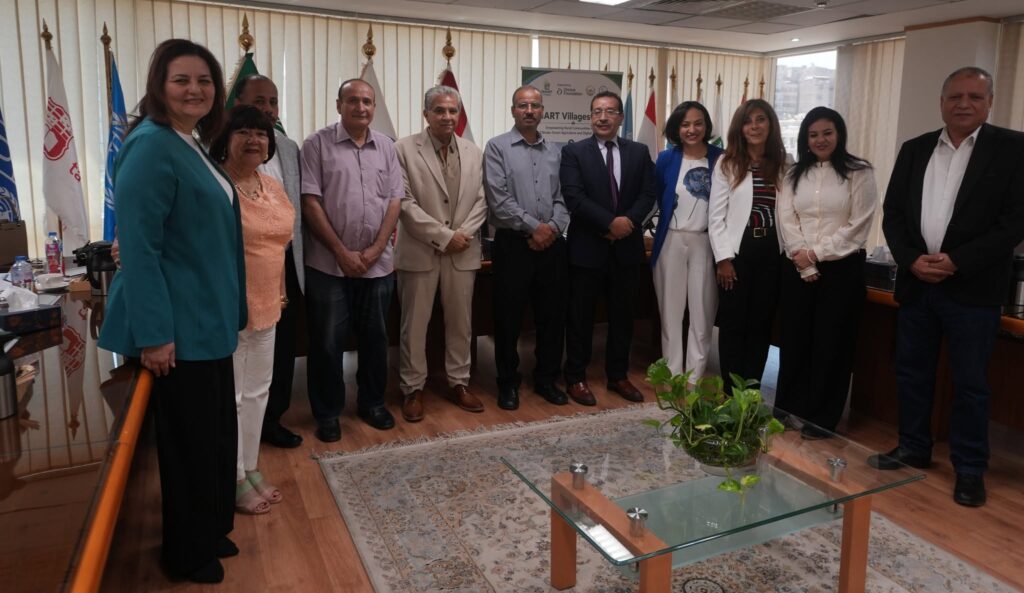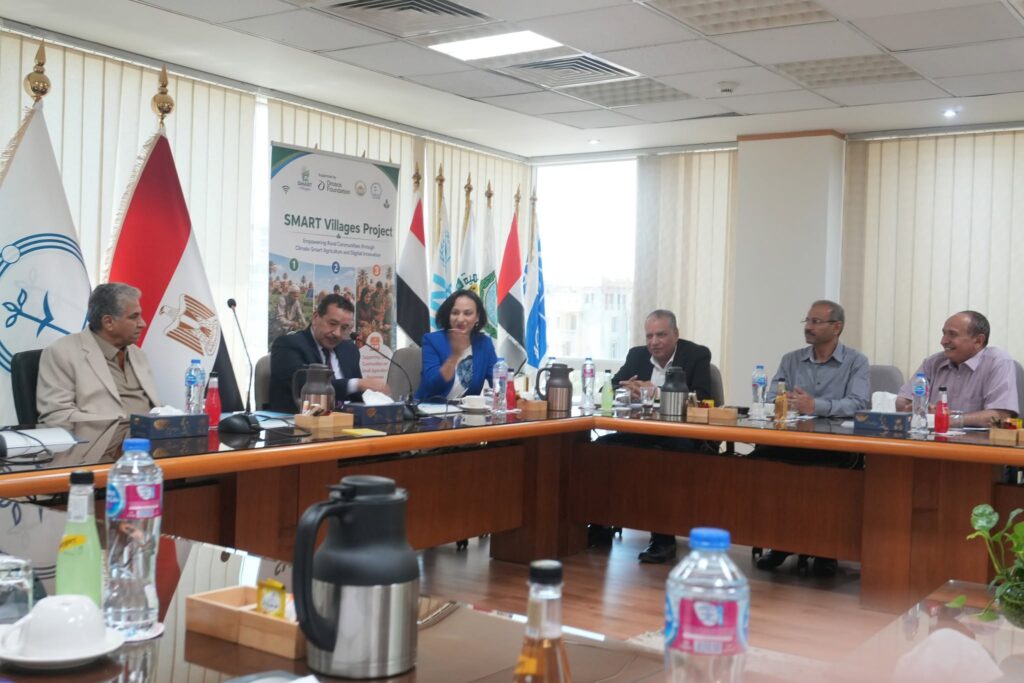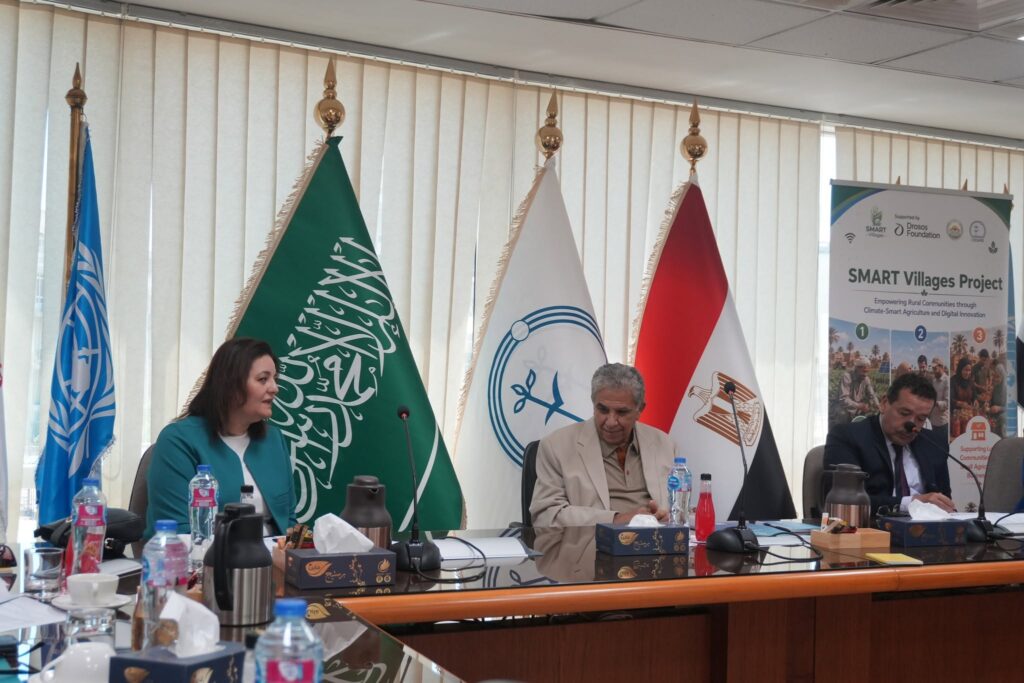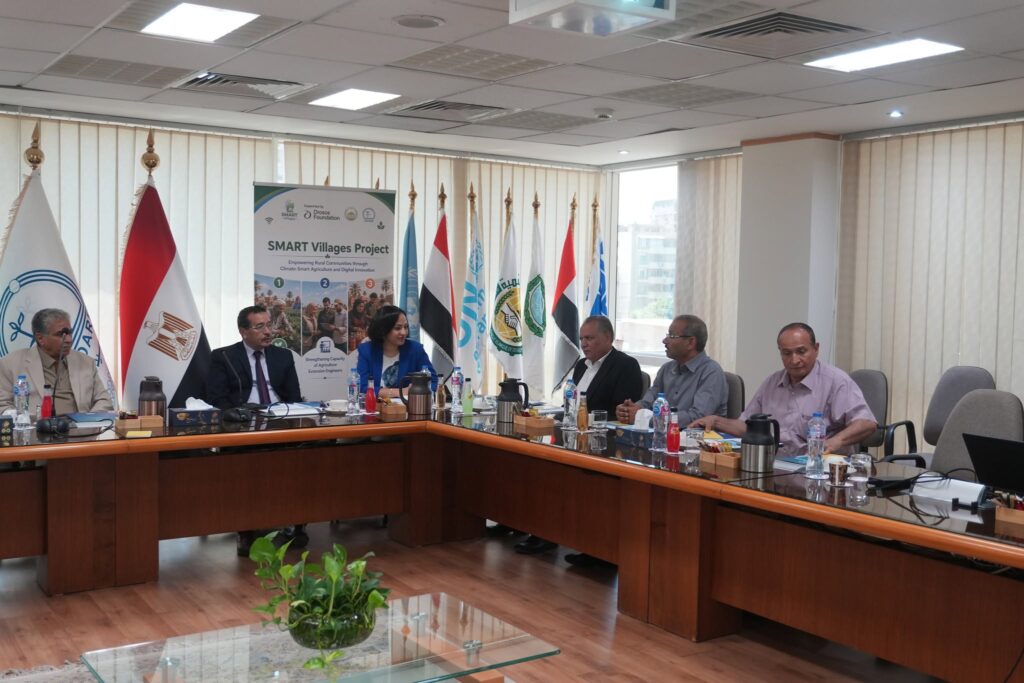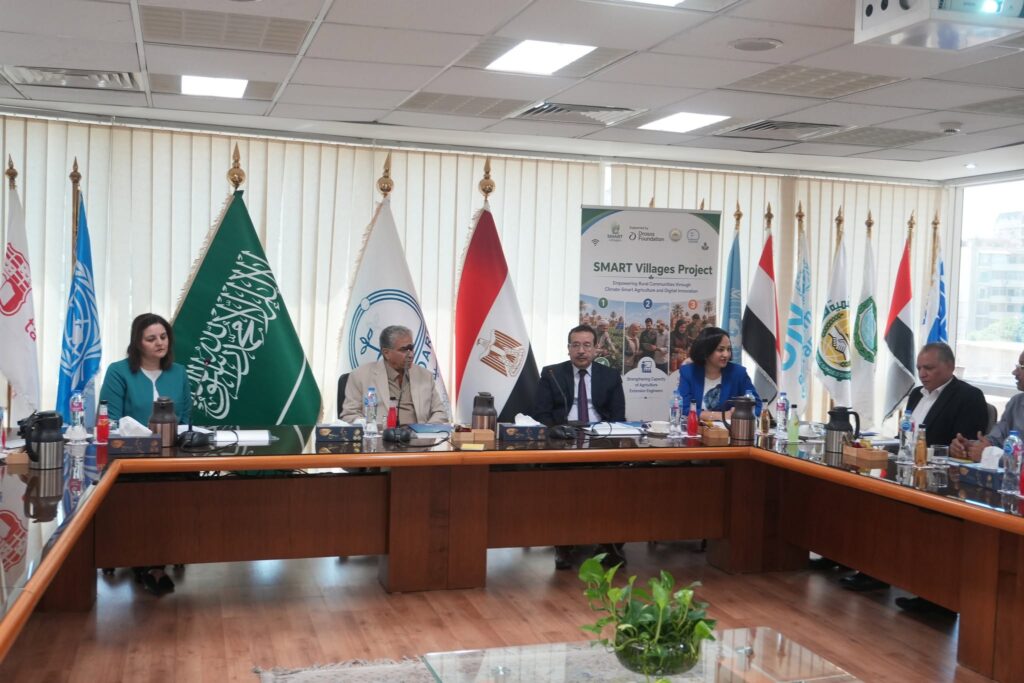
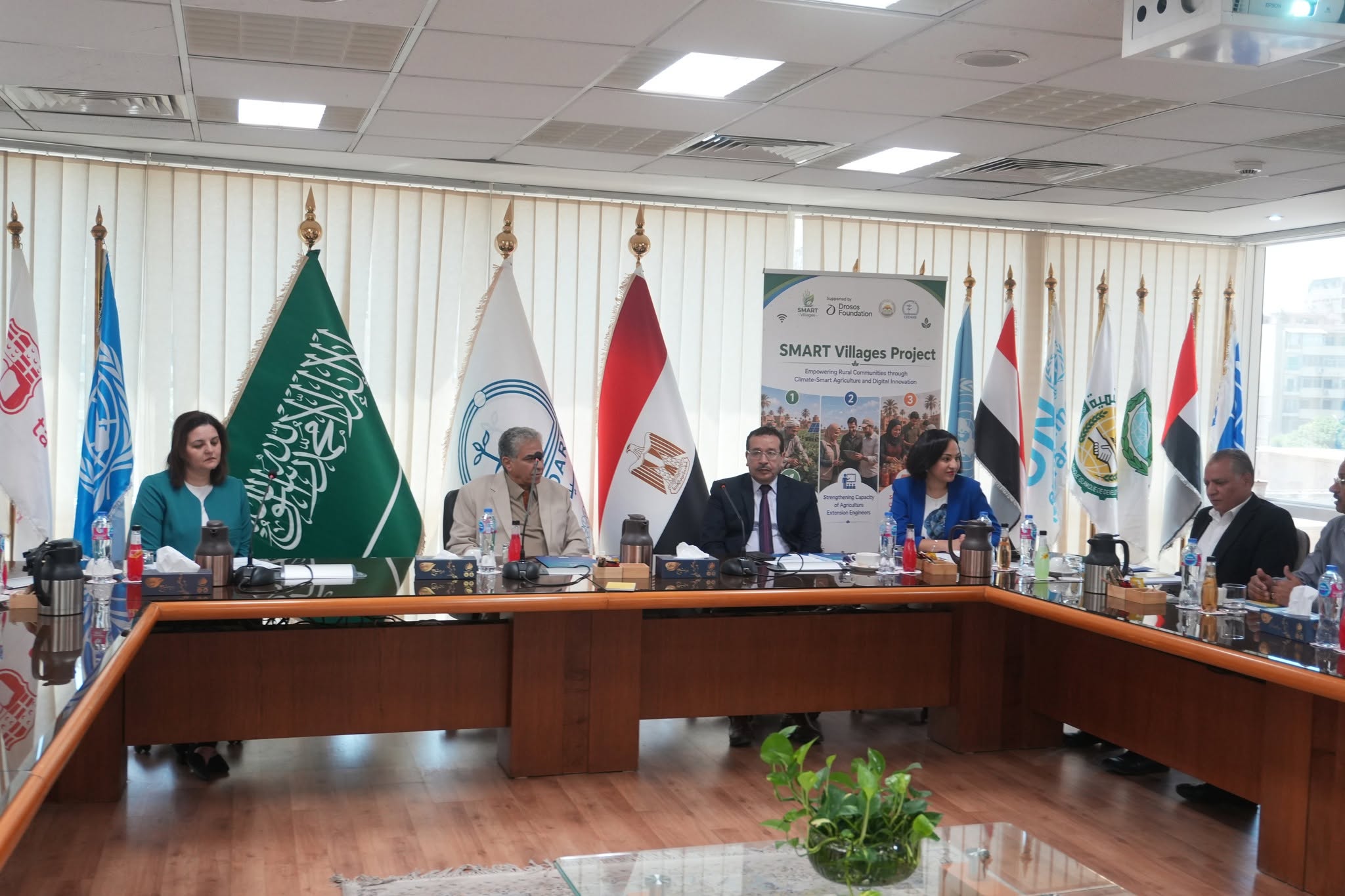
Centre for Environment & Development for the Arab Region & Europe (CEDARE) convened the first Advisory Committee meeting for the “Promoting Economic Independence and Community Resilience through Climate-Smart Agriculture and Innovation Technologies” project, funded by Drosos Foundation. The initiative seeks to promote sustainable rural development while empowering the most vulnerable groups within local communities.
The meeting brought together representatives from a number of national partner institutions, including: Ministry of Agriculture and Land Reclamation, Ministry of Local Development and Environment , Ministry of Water Resources and Irrigation, and National Council for Women. The Advisory Committee aims to provide strategic and technical guidance to the project while strengthening coordination and collaboration among partners to ensure the successful achievement of its development objectives.
Discussions focused on the project’s vision and objectives, the findings of the baseline study, and the Advisory Committee’s operational framework. Participants also reviewed the first-year work plan and the key activities scheduled for implementation during the upcoming phase.
The project aims to improve the productivity and resilience of smallholder farmers through the adoption of climate-smart agricultural practices. It also seeks to strengthen the capacities of agricultural extension engineers and enhance their role in transferring knowledge and delivering extension services. In addition, the project supports the economic empowerment of women and young people through the establishment and development of small agribusiness enterprises, contributing to increased income opportunities and greater economic independence.
The meeting marked an important step towards strengthening collaborative efforts to advance sustainable rural development and expand economic opportunities for farmers, women, and young people in the villages of Sol and Al-Barambel in Atfih District, Giza Governorate, thereby contributing to more resilient rural communities and more inclusive and sustainable development.