
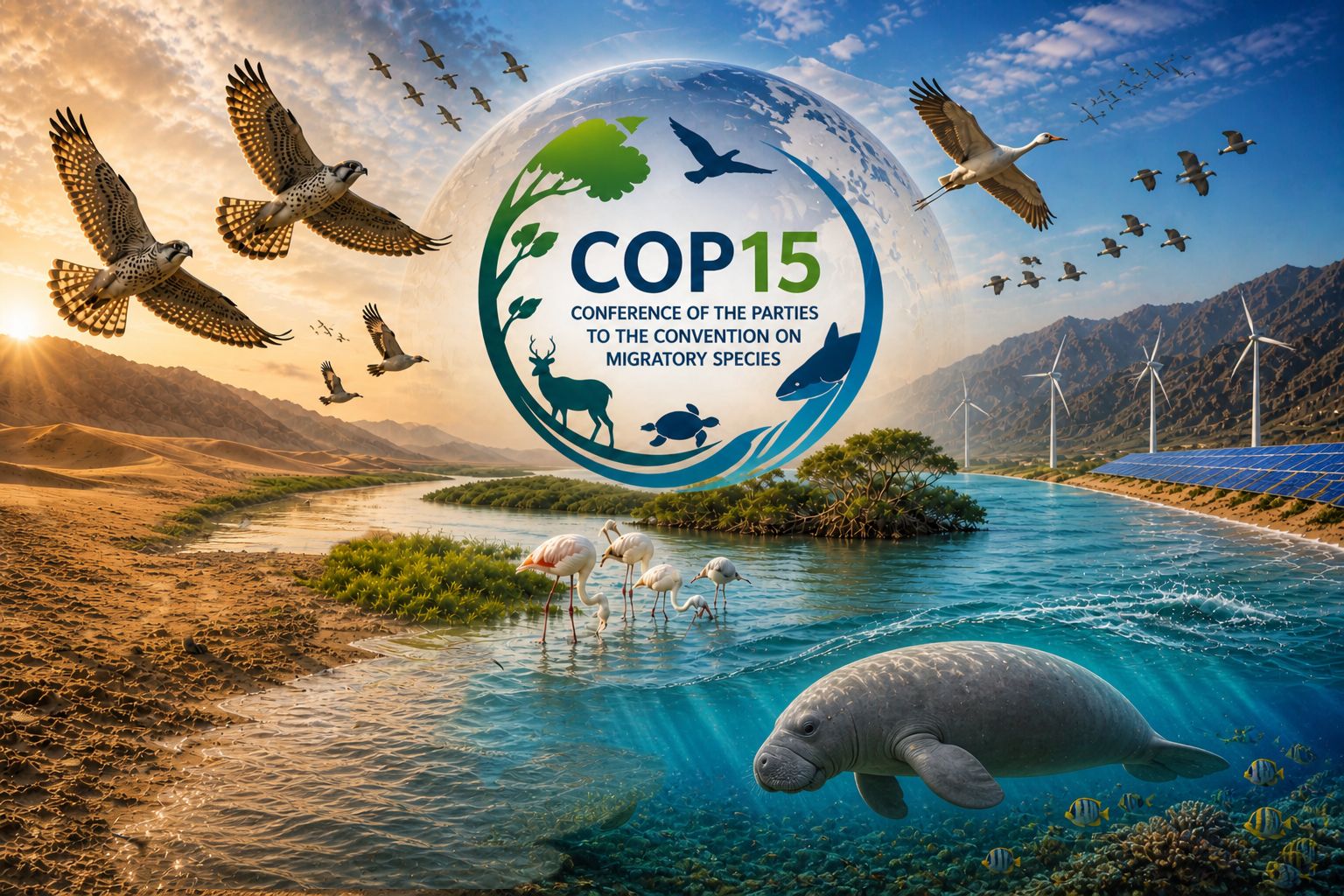
The Fifteenth Meeting of the Conference of the Parties to the Convention on Migratory Species (CMS COP15), held in Campo Grande, Brazil, from 23-29 March 2026, convened against a backdrop of alarming biodiversity decline. The interim “State of the World’s Migratory Species” report revealed that 49 per cent of CMS-listed populations are declining and 24 per cent face global extinction. Despite these sobering trends, the Conference delivered ambitious outcomes: 40 new species, subspecies, and populations were added to the CMS Appendices. Several new Concerted Actions were approved, and landmark decisions were adopted on ecological connectivity, deep-sea mining, infrastructure planning, and the formal recognition of multiple knowledge systems, including Indigenous and local knowledge, alongside conventional science.
While developing countries face significant implementation challenges, including limited technical capacity and financial constraints, COP15 also created meaningful opportunities. The new resource mobilization strategy mandates a rapid needs assessment to identify gaps and options for developing countries, particularly Least Developed Countries and Small Island Developing States, while the launch of the Global Initiative on Taking of Migratory Species (GTI) recognizes that domestic drivers of exploitation, often linked to poverty and food security, must be addressed through capacity-building and community-based approaches, and the Multi-species Action Plan for Amazonian Migratory Catfish explicitly integrates Indigenous and local knowledge and livelihoods, offering a model for balancing conservation with sustainable use.
Arab countries have both significant stakes and untapped opportunities within the CMS framework. Several Arab states are Range States for newly listed or discussed species: the Striped Hyena (listed on Appendices I and II), the Saker Falcon (Global Action Plan extended), and the Steppe Eagle (Global Action Plan adopted). Strategically, Arab countries should consider leveraging CMS Concerted Actions to address threats to regionally important species, building on existing MOUs; engaging with the Central Asian Mammals Initiative and the Raptors MOU for their regional benefits; and positioning themselves as conveners and funders of transboundary conservation—particularly given the Caspian Sea, Red Sea, and Arabian Sea host numerous migratory species. With CMS approaching its 50th anniversary in 2029, Arab countries that are not yet Parties should consider accession to help shape decisions on deep‑sea mining, renewable energy infrastructure, and ecological connectivity that directly affect the Red Sea, Arabian Sea, and Gulf region. Without stronger Arab voices, the region’s unique migratory species and conservation successes risk being underrepresented in the next triennium’s priority setting.