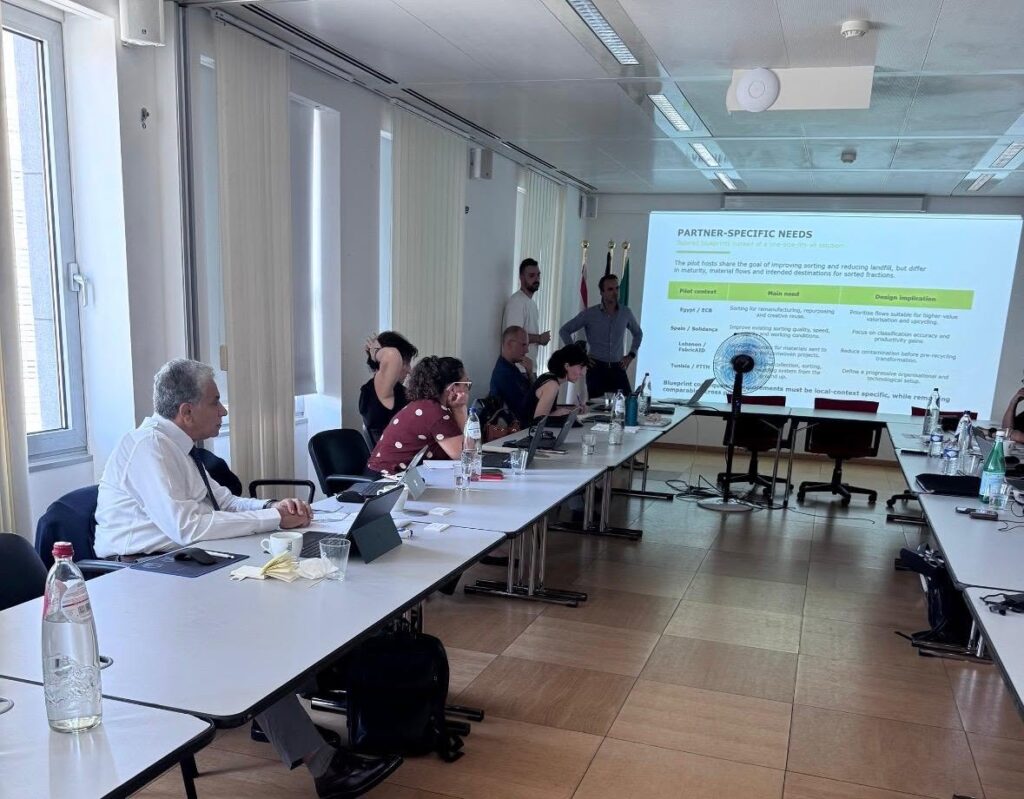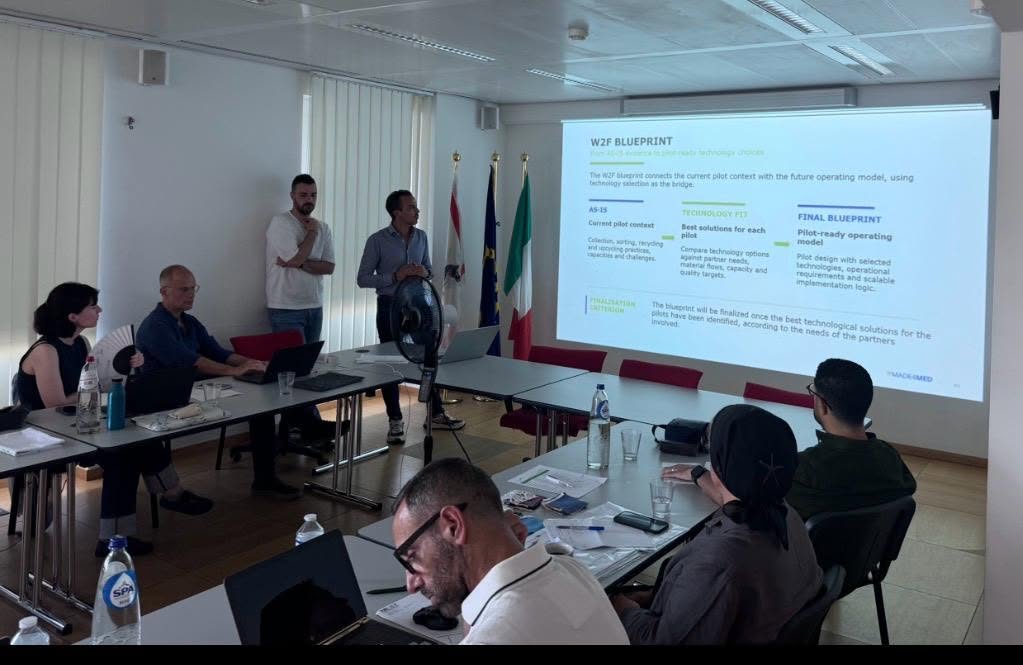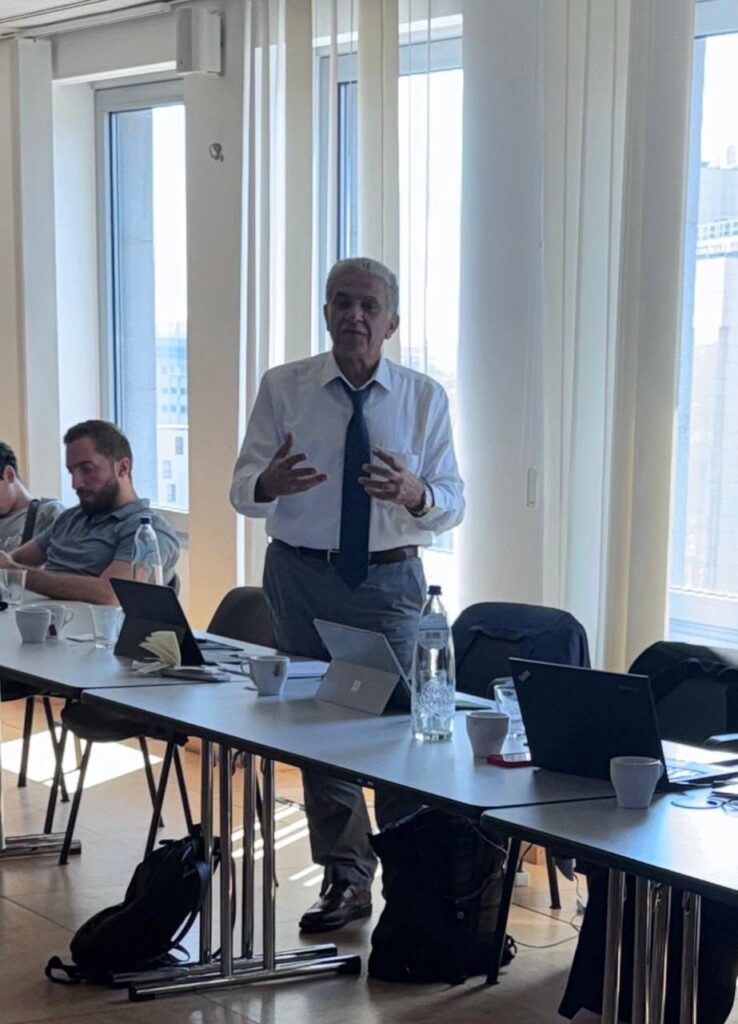
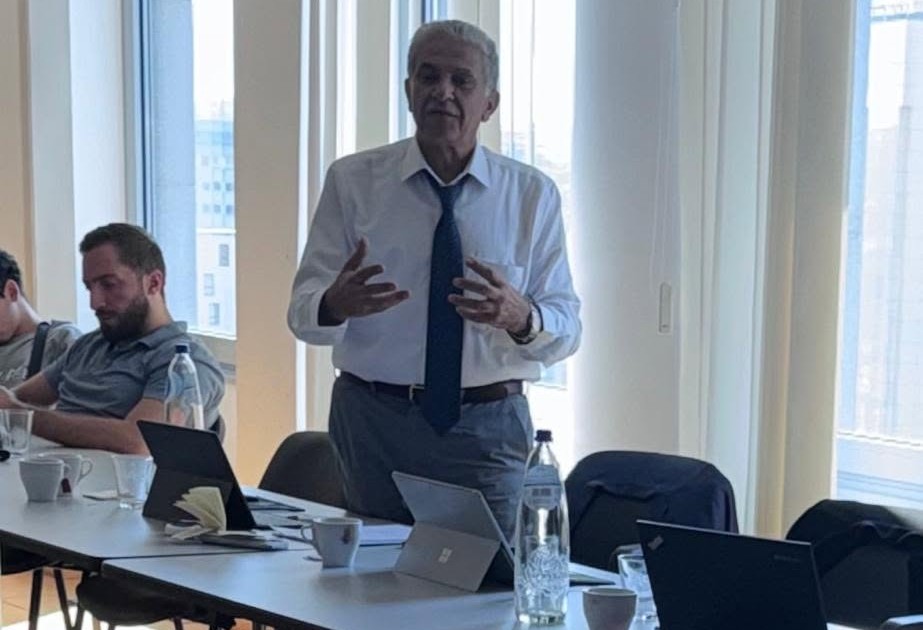
The Centre for Environment & Development for the Arab Region & Europe (CEDARE), represented by its Executive Director, Dr Khaled Fahmy, participated in the Second Steering Committee Meeting of the Waste2Fashion Project, held on 26 June 2026 in Brussels City / Belgium.
The meeting brought together project partners from Spain, Egypt, Italy, Tunisia, and Lebanon under the Interreg NEXT MED Programme. The project aims to establish a regional circular economy framework for the sustainable management of post-consumer textile waste across the Mediterranean region.
The Steering Committee reviewed the project’s implementation progress, assessed the status of the various work packages, and discussed potential challenges, associated risks, and mitigation measures. Participants also planned the next phase of implementation, reviewed the project’s communication and visibility strategy, and examined coordination mechanisms to further strengthen collaboration among project partners.
The Tunisian Federation of Textile and Clothing (FTTH) presented the progress achieved in implementing the Tunisian pilot, including the outcomes of the Living Lab and the next implementation steps. In collaboration with the Italian company Next Technology Tecnotessile, the Federation also presented the technical framework for the pilot activities and the implementation plan across the participating countries.
In this context, the Egyptian Clothing Bank (the Egyptian partner responsible for implementing the project’s pilot activities) highlighted the importance of regional cooperation in developing sustainable solutions for textile waste management. The organization presented progress under the Egyptian pilot, which focuses on strengthening systems for the collection, sorting and reuse of clothing and textiles, supporting beneficiary communities, and contributing to the development of more sustainable value chains within the textile sector. These efforts support the project’s objective of advancing circular economy principles while delivering lasting environmental and social impact.
Partners also reviewed the outcomes of their participation in the Textile Recycling Expo Europe 2026, held in Brussels on 24–25 June, where they explored the latest technologies and innovations in textile recycling and discussed opportunities to integrate these advances into the project’s pilot activities. These exchanges are expected to foster innovation and facilitate the development of practical, scalable solutions across the Mediterranean region.
In addition, the Italian institution Fondazione Museo del Tessuto, in collaboration with MedWaves, presented the implementation plan for Work Package 4, comprising the Eco Design Academy and the Circular Economy Accelerator. The initiative aims to support designers, entrepreneurs, and small and medium-sized enterprises (SMEs), while promoting innovation across the sustainable textiles sector.
CEDARE also presented the implementation plan for Work Package 5 (WP5), which includes the development of regional guidelines for the management of post-consumer textile waste, the transfer of knowledge and best practices, and the implementation of communication, dissemination, and exploitation activities to maximize the project’s results. These efforts aim to support the development of regional policy frameworks and promote the adoption of circular economy practices across the Mediterranean region.
During the discussions, Dr Khaled Fahmy, Executive Director of CEDARE, emphasized that the success of Work Package 5 extends beyond the preparation of regional guidelines. He stressed the importance of integrating policy and legislative dimensions from the earliest stages of designing and implementing the pilot actions, ensuring that the final guidelines are firmly grounded in practical experience and the lessons learned across the participating countries.
He added that CEDARE will lead the preparation and refinement of the draft regional guidelines in close coordination with all project partners, with the aim of producing a consensus-based document for endorsement through the United Nations Environment UN Environment Programme (UNEP) and the Barcelona Convention, via MedWaves. He noted that CEDARE will convene regular coordination meetings with the pilot project teams and engage relevant stakeholders from the early stages of implementation to enhance the quality of the deliverables, build broad consensus around the guidelines, and facilitate their adoption and implementation at the regional level.
Dr Fahmy further highlighted that CEDARE will leverage its extensive regional network across the Arab region to compile relevant expertise and good practices, thereby enriching the content of the regional guidelines. The Centre will also provide technical and coordination support to the project’s activities, including the Eco Design Academy, while fostering synergies across the different work packages to maximize the project’s overall impact and contribute to the achievement of its shared objectives.
The meeting concluded with all partners reaffirming their
commitment to continued collaboration during the next phase of the project and to accelerating the implementation of the planned activities. These collective efforts will contribute to achieving the project’s objectives, fostering innovation, and supporting the transition towards a more sustainable and resource-efficient circular economy across the Mediterranean region.