
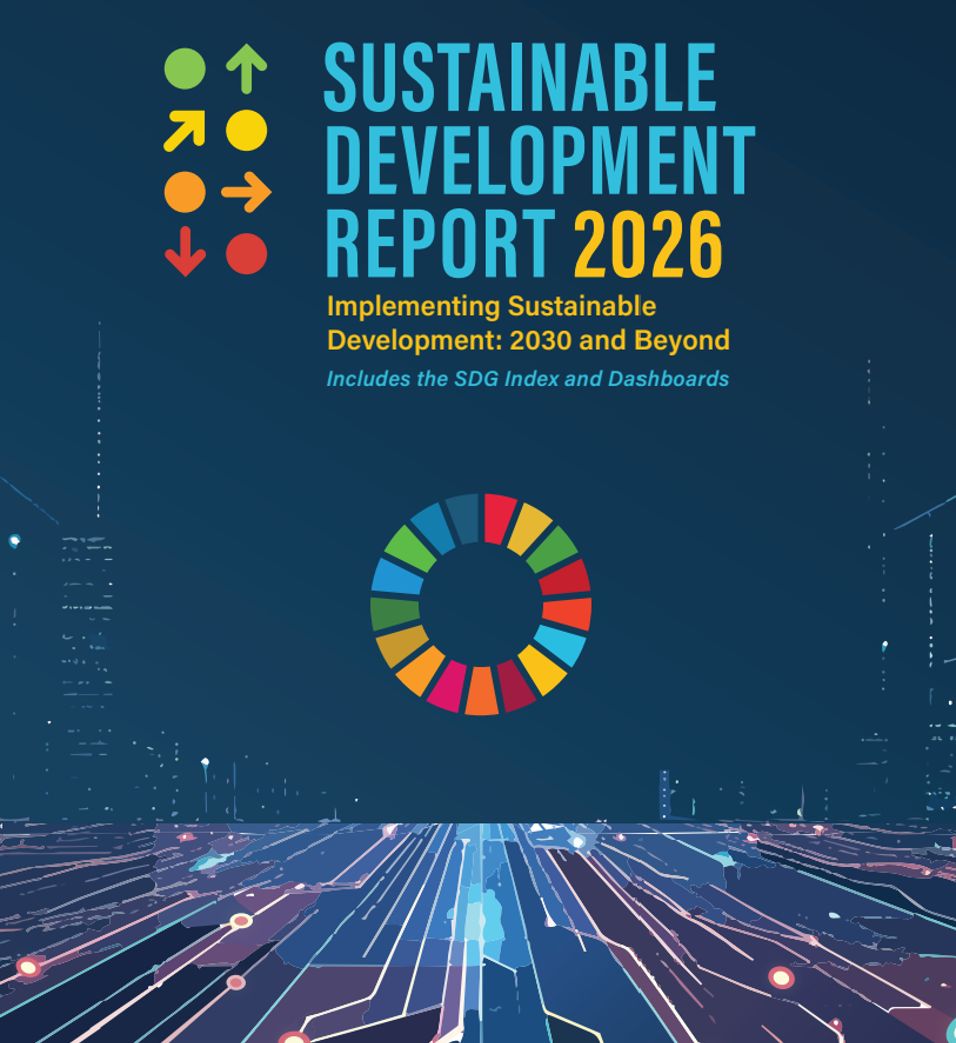
The newly released “Sustainable Development Report 2026: Implementing Sustainable Development: 2030 and Beyond” on 24 June 2026 (SDSN, 2026) confirms a paradox at the heart of the global sustainable development agenda: political commitment to the Sustainable Development Goals remains strong, but implementation is still far from the scale required. While the SDG framework continues to enjoy broad international support, only around 16% of SDG targets are currently on track to be achieved by 2030 (IISD, 2026). This means the challenge is no longer whether countries support the SDGs in principle, but whether they are willing to mobilize the finance, governance, planning, and cooperation needed to deliver them in practice. This is evidenced by:
- Global commitment remains strong despite political headwinds.
The report highlights that 190 countries have participated in the Voluntary National Review process, while a large majority of UN Member States continued to support UN General Assembly resolutions referencing sustainable development in 2025. However, the United States and Argentina emerged as consistent outliers in opposing resolutions linked to the 2030 Agenda. - Progress is highly uneven across regions.
East and South Asia has outperformed all other regions since 2015, with India and China recording the largest improvements among major economies. By contrast, low-income and conflict-affected countries remain significantly constrained by limited fiscal space, insecurity, and structural vulnerabilities.
- The main priority is implementation, not redesigning the goals.
The report argues that the post-2030 agenda should preserve the SDG framework while strengthening the means of implementation. Priorities include ending wars, redirecting military spending toward human development, adopting long-term investment plans, reforming development finance, strengthening regional and local cooperation, and developing global governance frameworks for AI and other emerging technologies.
The 2026 SDG report highlights that the SDGs are not dead, but the current implementation model is insufficient. The coming years will determine whether the global community can move from political endorsement to practical delivery.
For Arab countries, the report carries three main implications. First, SDG implementation must be endorsed as a national planning and financing priority, not only as a reporting exercise. Second, regional cooperation is essential, particularly on WEFE Nexus, climate resilience, and digital transformation. Third, as global cooperation becomes more fragmented, Arab countries should strengthen their collective engagement in multilateral platforms and South–South partnerships to protect development priorities, attract investment, and avoid falling further behind the 2030 targets.