
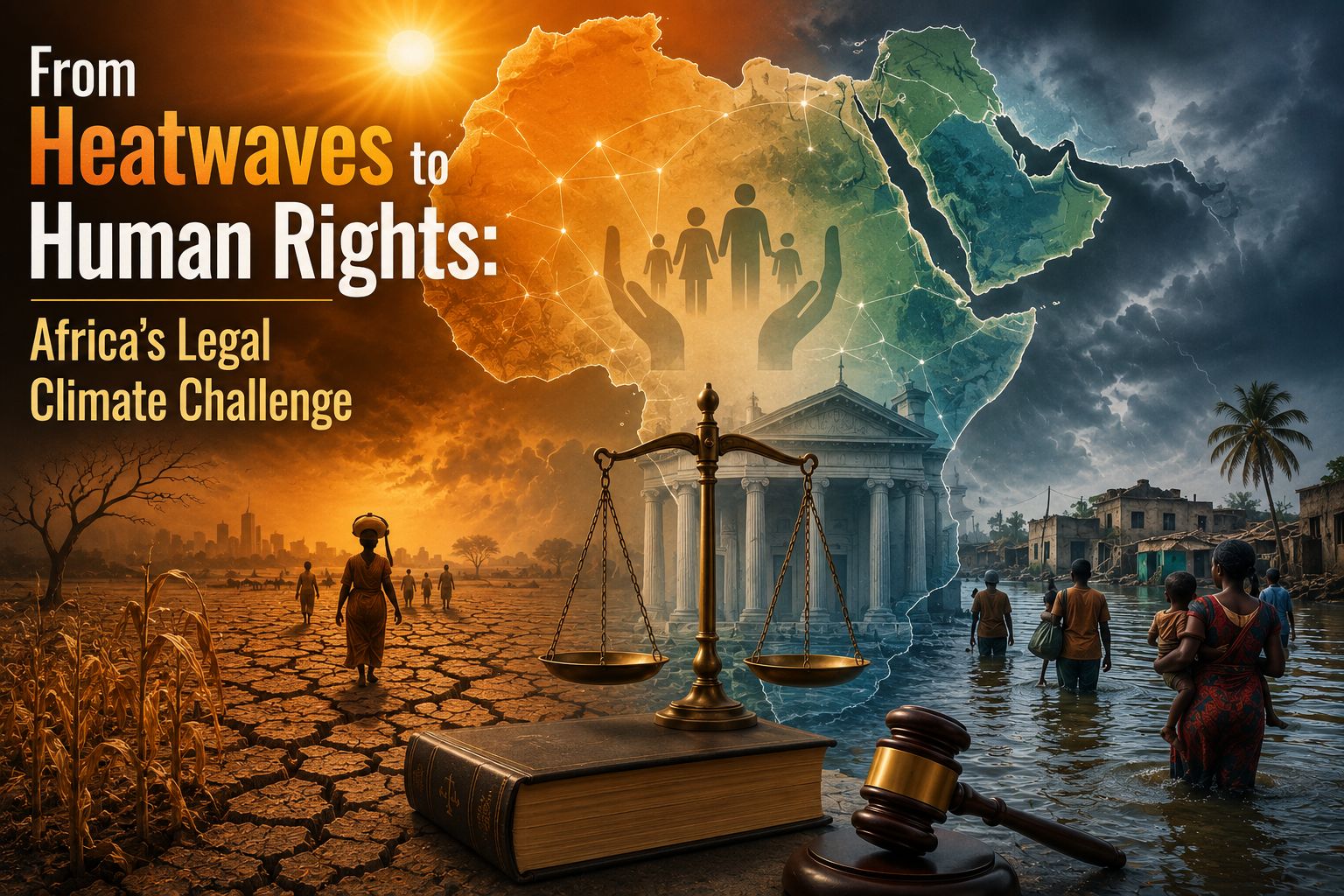
The argument that climate change violates human rights is no longer an abstract ethical claim; it is a measurable legal reality. The impacts of climate change are increasingly translating into human rights violations across the continent. Droughts, floods, food insecurity, and displacement undermine rights to life, health, water, housing, and livelihoods. Globally, climate governance is being explicitly integrated into international human rights law. States can no longer treat mitigation and adaptation as discretionary policy choices; they are legally mandated duties of care. This is evidenced by:
- The impacts of climate change are increasingly translating into human rights violations across the continent. As argued in The Conversation (2026) article on Africa’s climate crisis, climate stability is essential for protecting basic human rights, which means governments must address climate harm as a rights-based responsibility, not merely an environmental concern.
- Climate action is increasingly being reframed as a legal duty under human rights law. States are expected to prevent foreseeable environmental harm, rely on scientific evidence, and regulate activities that significantly contribute to climate change. This shift is reinforced by international legal developments, including the International Court of Justice (ICJ) advisory opinion recognizing states’ obligations to protect the climate system and linking environmental protection to fundamental human rights (Euronews, 2025).
- Global and regional human rights bodies are increasingly strengthening accountability for climate inaction. Courts are progressively recognizing that environmental degradation can constitute a violation of human rights, expanding the legal basis for holding states responsible. For example, the Inter-American Court of Human Rights has affirmed that states have a duty to prevent environmental harm that threatens human rights, reinforcing the idea that climate governance is subject to judicial review (Euronews, 2025).
Ultimately, the convergence of climate science, human rights law, and international jurisprudence signals a shift in how climate governance is understood, from a voluntary policy domain to a framework of enforceable legal obligations.
For Arab countries, where climate risks such as water scarcity, extreme heat, and desertification are intensifying, this legal framing highlights that climate adaptation and mitigation are not only development priorities but also integral to fulfilling state obligations to protect human rights.