
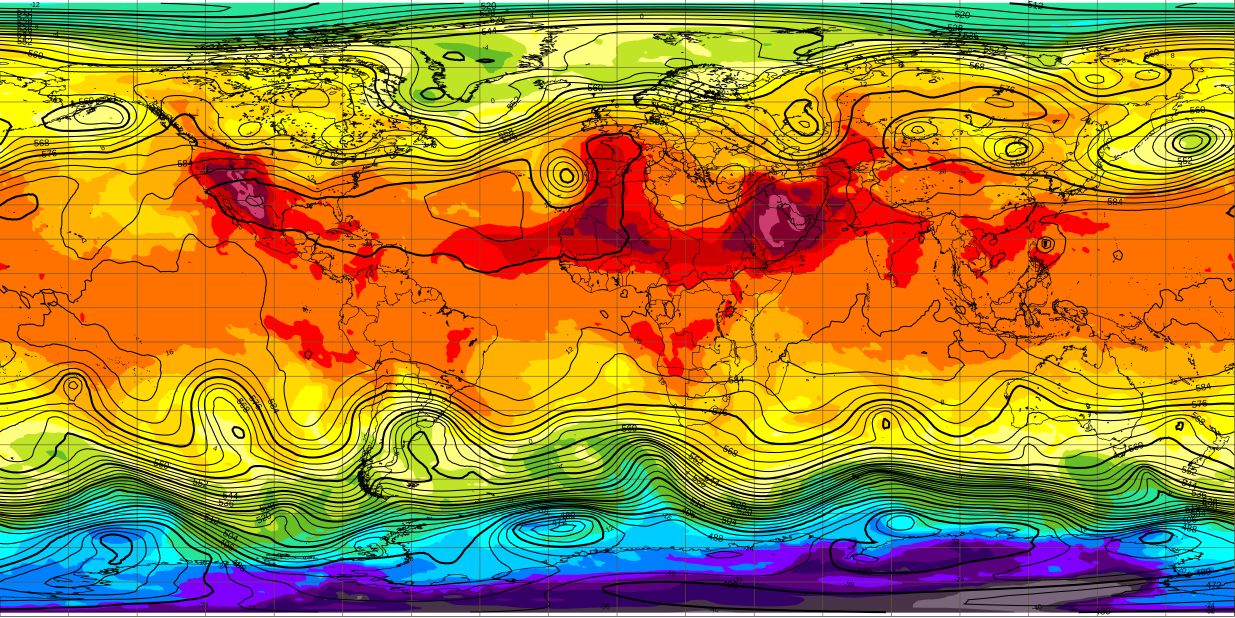
A Signal from the Deep
Something is stirring beneath the surface of the Pacific Ocean. Vast reservoirs of warm water that retreated during the recent La Niña period are advancing eastward, guided by shifting winds and currents that have been in motion for millennia. This movement is reactivating the “Bjerknes feedback; a potent ocean-atmosphere coupling characterized by a reciprocal positive feedback loop. As the easterly trade winds weaken, warm surface water ripples toward the Americas; this migration further reduces the pressure gradient across the Pacific, which in turn suppresses the winds even more, creating a self-reinforcing cycle of thermal accumulation.
The signal is now clear enough that the world’s leading climate agencies; NOAA, the World Meteorological Organization (WMO), and the European Centre for Medium-Range Weather Forecasts, have reached a rare and striking consensus. As of May 2026, the transition is moving rapidly. The “spring predictability barrier,” that period of boreal spring when forecasts are notoriously uncertain, has been breached. With data now flowing from a post-May vantage point, the consensus is actionable: the cooling phase has ended, and the planet’s most powerful climate engine is waking up with unprecedented momentum.
The “Super” El Niño of 2026: More Than Just a Weather Cycle
The 2026 event is not merely a return to a familiar pattern; it is evolving into a “Super” El Niño. This classification is triggered when sea surface temperature anomalies exceed +2°C. Subsurface temperatures in the central-eastern Pacific have already shown anomalies reaching 6°C at depth, providing a massive reservoir of heat to fuel the surface transition through the remainder of the year.
The defining characteristic of this event is its baseline. This El Niño is arriving on top of an anthropogenic baseline that is already 1.3°C warmer than pre-industrial levels. This interaction creates compounding climate hazards that push the global system into uncharted territory. As UN Secretary-General António Guterres recently warned, “El Niño conditions will pour fuel on the fire of a warming world. Impacts will hit even harder, travel even farther, and cross borders with devastating speed.”
The Trillion-Dollar Economic Hammer
New research published in the journal Science by Dartmouth researchers Christopher Callahan and Justin Mankin suggests that the economic toll of El Niño is a “persistent signature” that lasts far longer than the weather event itself. The study estimates a $3.4 trillion global cost for the current cycle, with projected losses reaching $84 trillion by the end of the century as climate change intensifies these cycles.
The economic damage is defined by a “14-year tail” of depressed growth, categorized by:
- Reconstruction Costs: Multi-decade recovery efforts for infrastructure damaged by floods and fires that exhaust national reserves.
- Diverted Innovation: Capital is redirected away from productive technology, research, and development toward disaster relief.
- Stagnation of the Green Transition: The diversion of funds delays critical investments in climate adaptation technology, slowing the transition to a low-carbon economy when it is most needed.
Unlike the acute shock of a pandemic, El Niño acts as a subtle but powerful drag on innovation, creating long-term stagnation that hits lower-income tropical nations with the force of a full-scale financial crisis.
Crossing the 1.5°C Threshold
The thermal momentum of the 2026 onset makes it a near-certainty that 2027 will become the hottest year on record. This spike is highly probable to push global temperatures, at least temporarily, past the 1.5°C warming limit established by the Paris Agreement.
From a specialist perspective, this is a critical climatological milestone. While a single-year breach differs from a permanent increase in the long-term average, it will trigger essential institutional risk re-evaluations. Global development agencies and fiscal planners must now treat the 1.5°C limit not as a distant guardrail, but as a threshold we are currently actively crossing, necessitating a fundamental shift in resilience benchmarks.
Ecological Tipping Points and “Ghostly” Reefs
Marine and terrestrial ecosystems are facing a state of collapse as El Niño arrives amidst record-breaking ocean heat content. Coral reefs are the front line of this crisis. During previous cycles, approximately 30% of global corals perished due to mass bleaching, where heat stress forces corals to expel their life-sustaining algae.
The current reality is shudder-inducing. For reefs like those at Christmas Island (Kiritimati), the starting point for the 2026 event is a mere 10% of the original coral cover left behind by the 2015-16 “mega” event. This return of extreme heat acts as a coup de grâce for such fragile ecosystems. The loss of these foundations triggers secondary collapses, including kelp forest die-offs and invasions of predatory crown-of-thorns starfish.
“The coral is the basis of the reef; it’s the foundation of everything else. Without it, reefs either don’t exist or look completely different,” notes marine ecologist Danielle Claar regarding the potential for total ecosystem service loss.
A Multi-Front Food Security Threat
El Niño intensifies existing global inequalities, pushing the highest risks onto the least resilient populations. For Northern Africa and the Middle East, the 2026 forecast indicates a dangerous “heat dome” effect, trapping warm air and driving temperatures well above seasonal averages.
This region now faces a multi-front food security threat:
- The Fertilizer Crisis: The ongoing Iran war and disruptions in the Strait of Hormuz have constricted the flow of critical agricultural inputs.
- Compounding Drought: El Niño-driven droughts are occurring simultaneously with these supply chain collapses, creating a high risk of harvest failure and famine in rain-fed agricultural zones.
- Extreme Heat Stress: Northern Africa and the Caribbean are flagged for intensified heat stress, where the interaction between a warmer atmosphere and El Niño increases the moisture and energy available for violent weather events.
A New Yardstick for a Warmer World (RONI)
To provide cleaner data in a rapidly warming environment, NOAA officially transitioned in February 2026 to the Relative Oceanic Niño Index (RONI).
Why it matters: Traditional tools like the Oceanic Niño Index (ONI) often conflate natural variability with the long-term anthropogenic warming of the oceans. By measuring El Niño relative to the warming global tropics rather than a fixed historical baseline, RONI allows for a more accurate early warning. This methodological shift prevents policymakers from underestimating the specific costs of global warming by separating the “background noise” from the specific ENSO-driven signal.
The “Nocturnal Harvest” and Social Tension
The climatic shifts of 2026 are radically altering human behaviour. In the Global South, extreme heat has normalized the “nocturnal harvest,” where farmers are forced to switch to nighttime labour to avoid lethal daytime conditions. This shift is a visceral indicator of how close we are to the limits of human physiological adaptation.
Furthermore, the risk of social instability is escalating. Historical data indicates that the likelihood of civil conflict in affected tropical countries can double during El Niño years. Since 1950, approximately 21% of global conflicts have been linked to these cycles, as harvest failures and resource scarcity exacerbate existing social inequalities and push populations toward the brink.
Conclusion: Beyond the Spring Predictability Barrier
As we move past the spring predictability barrier, the signal from the ocean has become an imminent reality. The 2026 El Niño is no longer a projection; it is a systemic shock currently unfolding across our economic, ecological, and social systems. It demands a level of climate action equal to the crisis—one that prioritizes the acceleration of the green transition and the hardening of infrastructure in the most vulnerable regions.
The signal has been sent, and the “spring barrier” of uncertainty is behind us. The defining question for our institutional and political systems is now one of preparedness: If the 2026 El Niño is a “hammer,” are we building a house that can withstand the blow, or simply waiting for the roof to fall?