
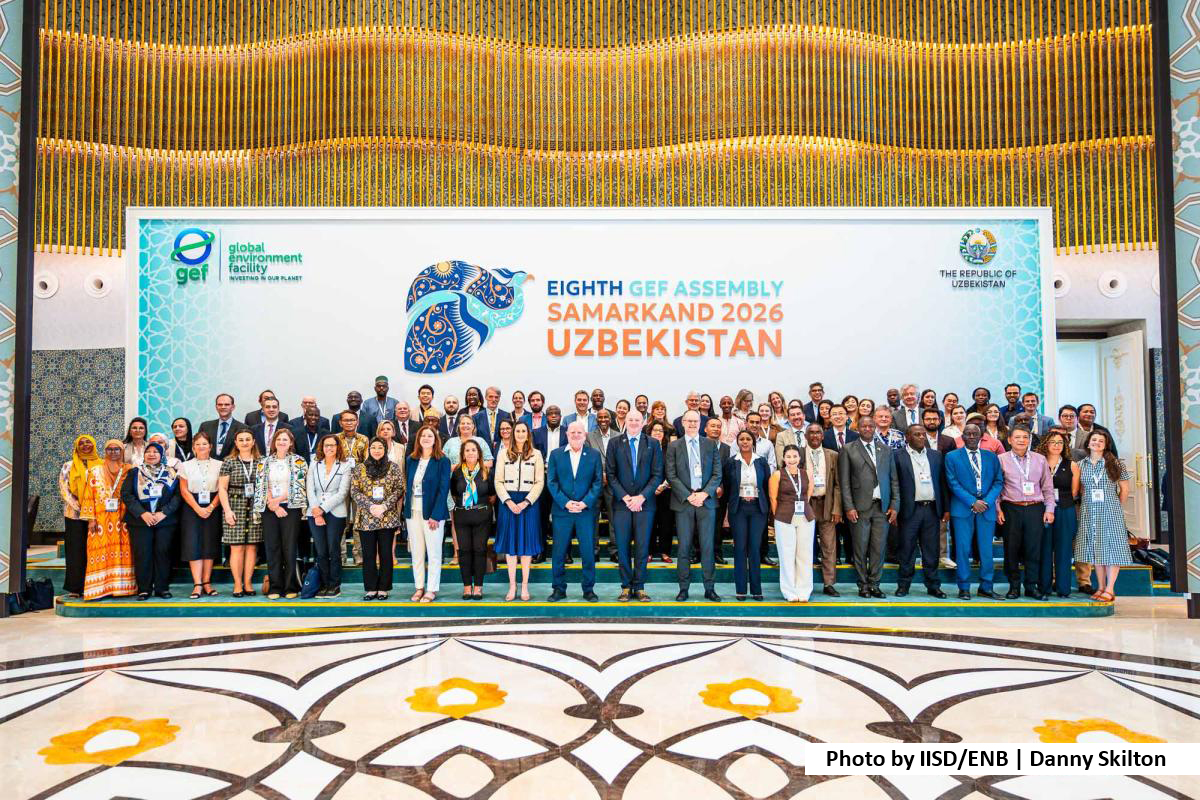
Set against the historic backdrop of the Silk Road, the 8th Global Environment Facility (GEF) Assembly convened in Samarkand, Uzbekistan, from 31 May to 3 June 2026, gathering global leaders to chart a new chapter for international climate finance.
Key Takeaways & Strategic Milestones
1. Financial Milestone: Securing the GEF-9 Trust Fund:
Negotiations for the ninth replenishment of the GEF Trust Fund (GEF-9) have successfully concluded, securing an initial pledge of USD 3.9 billion.
2. Strategic Pivot: A Modernized Approach to Global Impact
The framework introduces a structural pivot designed to drive systemic, cross-cutting transformations across the climate, biodiversity, and pollution agendas. This evolution is defined by:
- Inclusive Collaboration: Embracing a “whole-of-government” and “whole-of-society” model through integrated programming.
- Private Capital Mobilization: Deploying blended finance tools to attract private investors, backed by an aspirational 25 per cent programming target.
- Operational Excellence: Streamlining fund access while simultaneously strengthening accountability measures.
The Bigger Picture: While the overall funding represents a decrease from the previous cycle, the successful conclusion of these negotiations signals a powerful, renewed vote of confidence in multilateral cooperation—even during a period of heightened geopolitical strain.
Developing Nations: Opportunities vs. Challenges
For developing nations, particularly Least Developed Countries (LDCs) and Small Island Developing States (SIDS), GEF-9 presents a complex mix of new advantages and systemic hurdles:
Key Opportunities:
- Targeted Funding: The GEF 9 replenishment explicitly dedicates 35 per cent of all resources directly to LDCs and SIDS.
- Inclusive local Action: Sets an aspirational target of 20 per cent for environmental actions driven by Indigenous Peoples and Local Communities (IPLCs).
- Bridging the Finance Gap: Expanded use of non-grant instruments and blended finance, provides a pathway to unlock private capital that public finance alone cannot match.
However, major challenges remain, including:
- Funding Deficit: The USD 3.9 billion pledge marks a noticeable decrease from the USD 5.3 billion envelope of GEF-8, leaving a substantial financing gap across multilateral environmental agreements.
- Capacity Bottlenecks: Navigating complex financial instruments and private sector mechanisms requires robust institutional capacity, which many vulnerable nations currently lack.
- Systemic Risks: Council discussions highlighted prominent concerns regarding bureaucratic hurdles, the urgent need for simpler access, and the risk that blended finance might replace—rather than complement—vital concessional resources.
Strategic Pathways for Arab Countries
The outcomes of the GEF Assembly outlines specific pathways and avenues for Arab nations to address regional environmental vulnerabilities and expand their global influence:
- Targeted Climate Resilience: Nations grappling with acute water scarcity, land degradation, and severe drought risks are urged to leverage GEF-9’s enhanced focus on drought resilience and nature-based solutions (NbS), providing a direct funding channel for regional priorities.
- Institutional Strategy: Arab states with significant sovereign wealth and private capital pools, can position themselves as pioneers in the blended finance agenda. By partnering with GEF to de-risk investments in green infrastructure and renewable energy, they can unlock domestic and regional private capital while meeting their own sustainable development goals.
- Cross-Border Collaboration: The Assembly’s emphasis on regional collaboration creates opportunities to propose vital transboundary environmental projects, such as addressing transboundary dust storms or marine ecosystem protection in the Red Sea and Arabian Gulf.
- Donor Base Expansion: The call to expand the GEF donor base to include non-sovereign contributors signals a timely window for oil-exporting nations to consider increasing voluntary contributions, thereby strengthening their diplomatic influence and ownership over the global environmental agenda.
- National Coordination: Adopting whole-of-government coordination mechanisms at the national level will be essential for these nations to effectively absorb and deploy GEF resources for maximum long-term impact.