
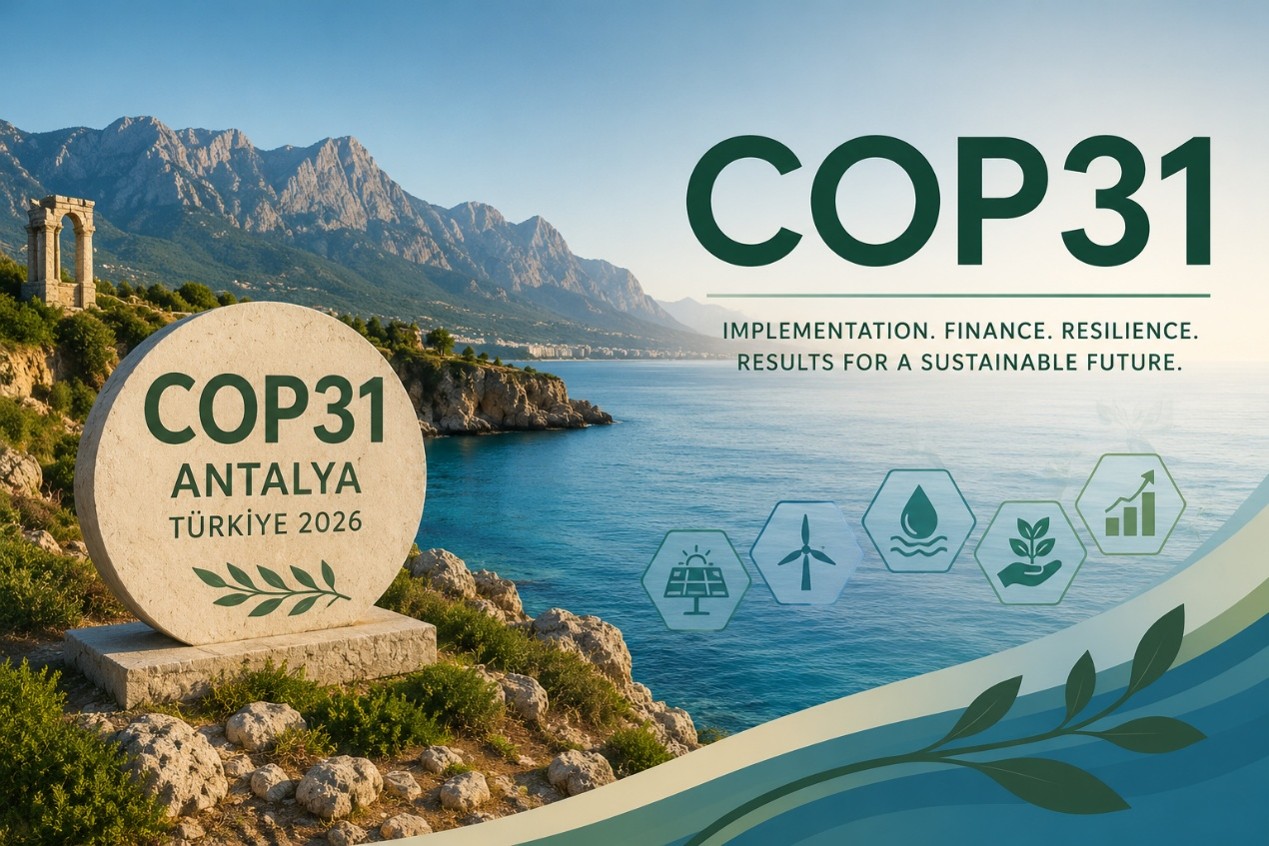
COP31, scheduled for 9–20 November 2026 in Antalya, Türkiye, is expected to mark a decisive shift from negotiating climate commitments to demonstrating how they will be implemented (UNFCCC, 2026). The summit will take place amid intensifying climate impacts, constrained public budgets, geopolitical fragmentation, and weakened international climate leadership. Its success will therefore depend less on announcing new ambitions and more on converting existing pledges into finance, investment, institutional reforms, and measurable results. This expectation is accompanied by three major challenges:
1. COP31 must close the gap between climate pledges and practical implementation.
Countries will face pressure to show how their nationally determined contributions, adaptation plans, and energy-transition commitments are being translated into funded policies and bankable projects. However, many of these initiatives remain voluntary, meaning that their credibility will depend on finance, timelines, accountability, and national delivery mechanisms (The Guardian, 2026).
2. Climate finance will remain the summit’s central political test.
Developing countries will expect clearer pathways for adaptation finance, loss and damage support, concessional funding, and implementation of previous financing commitments. Without accessible grants, affordable capital, and simplified financing procedures (who will pay, in what form, and at what scale), COP31’s implementation agenda may remain largely rhetorical.
3. Political fragmentation may constrain ambition. The unusual Türkiye–Australia leadership arrangement must reconcile different regional priorities while ensuring meaningful representation for developing countries and climate-vulnerable Pacific states. At the same time, reduced U.S. engagement in international climate institutions, tensions over fossil-fuel transition, and unresolved divisions from the Bonn negotiations could make consensus difficult (Politico, 2026).
Overall, COP31 success will depend on whether it can turn climate commitments into credible, adequately financed, and measurable implementation, particularly for developing and climate-vulnerable countries.
For Arab countries, COP31 offers an opportunity to advance adaptation finance, water security, resilient infrastructure, renewable energy, and carbon-market readiness. However, benefiting from the summit will require coordinated regional positions, credible climate data, investment-ready project pipelines, and stronger national systems capable of turning negotiated outcomes into implementation.